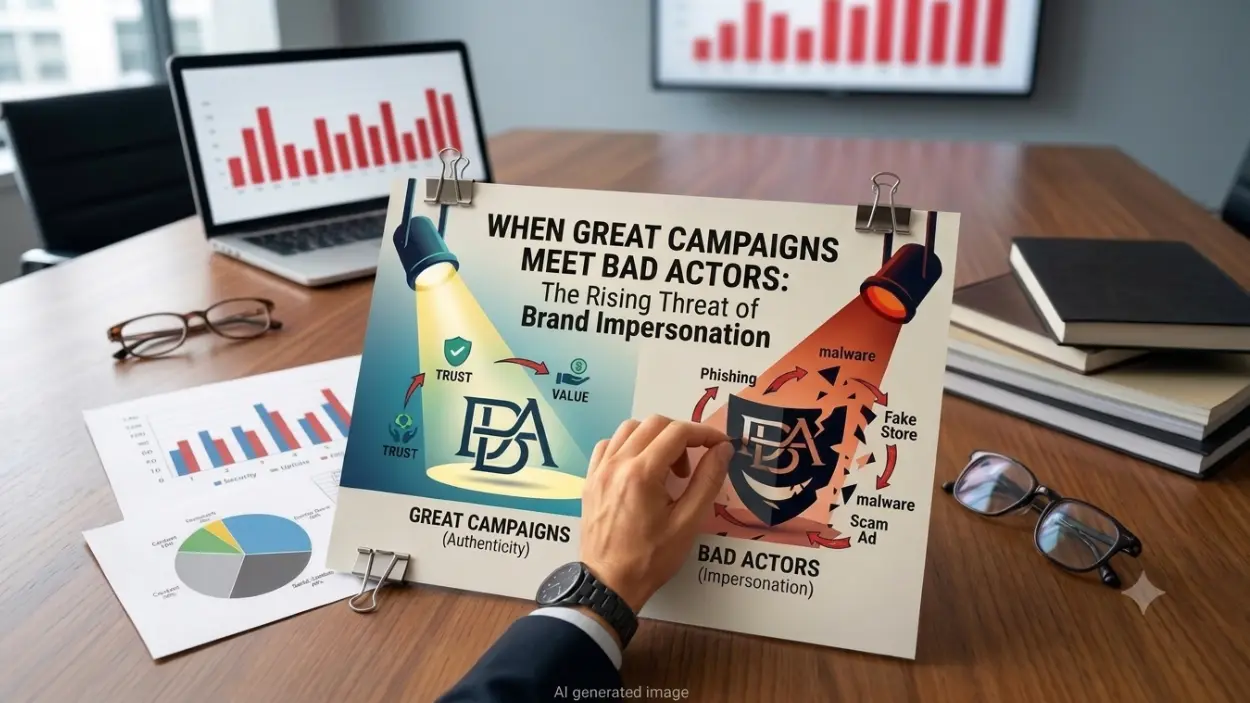
Besides creativity, a successful marketing campaign is also built on trust. Trust is what makes people open emails from their favorite brands and click on links in newsletters. Trusting the brand, customers respond to support messages and interact with promotional campaigns. But today, this trust is more and more often targeted by cybercriminals. Brands that have invested in their reputation for years now face the following problem. Attackers use their names, logos, and communication channels to deceive consumers. Brand impersonation has become one of the most common tools of digital fraud. A company’s reputation and the effectiveness of its marketing efforts are at risk. Thus, the consequences extend far beyond mere financial losses.

Why Brand Impersonation Is So Effective
Modern impersonation attacks rarely look crude. Fraudsters meticulously copy corporate branding and email design. They skillfully mimic website layouts and even the communication style of company representatives. That’s why, in many cases, it’s hard for users to tell the difference between genuine communication and a fake. What’s particularly dangerous is that attackers often run their schemes alongside real advertising campaigns. When a brand is running a promo or actively selling a new product, consumers expect to receive messages from the company. It is precisely at this moment that fake messages, emails, or calls have the greatest chance to succeed.
The foundation of success—human trust
Unlike technical attacks, brand impersonation primarily exploits human psychology. When a message looks familiar and appears to come from a well-known company, users are less likely to verify the details. Therefore, even the best advertising campaign can inadvertently create extra opportunities for scammers if the audience doesn’t know how to spot fake messages.
Consumer education as a brand protection measure
Brands can no longer rely solely on the power of marketing to sustain audience trust. They also need to teach customers to spot fraudulent attempts disguised as official communications. As cyber threats become ever more sophisticated, resources that explain warning signs across email and phone calls are invaluable. Such resources, including Moonlock, are among the most helpful in alerting people to unusual requests for personal data and the suspicious urgency of messages. They also emphasize the need to be vigilant to spot discrepancies in sender addresses. Special attention is given to the methods scammers use to trick people into acting without verifying the information. These are the very signs that often accompany spoofing and other forms of impersonation.
How companies can help their audience
Today’s most effective companies not only respond to incidents but also proactively explain to customers which channels they use for official purposes. Many brands regularly remind customers that they never ask for passwords, verification codes, or payment details via email or phone calls. This approach lowers the risk of fraud and simultaneously strengthens trust in legitimate communications with the company.
Impersonation and the Undermining of Marketing Campaign Effectiveness
1. Rising costs for security and scam prevention.
Today, companies are forced to invest not only in marketing but also in protecting their digital identity. The following actions become an essential part of business strategy:
- Monitoring of counterfeit domains,
- Detection of fake support pages,
- Implementation of authentication mechanisms
- Scam prevention programs.
2. Reputational damage often exceeds direct financial losses.
When a customer falls victim to fraud through a fake website or an email claiming to be from a well-known brand, the customer’s initial emotional reaction is often directed at the company itself, rather than the perpetrator. Even if the brand has no connection to the incident, trust levels can drop dramatically. For marketing teams, this creates a serious problem. Users are less likely to open official newsletters and engage less actively with the brand.

Conclusion
Brand impersonation has become a systemic threat to marketing, customer experience, and corporate reputation. The more successful a brand is and the larger its campaign, the more attractive a target it becomes for scammers. In today’s digital environment, trust is no longer just the result of successful marketing. It also depends on a company’s capacity to protect its customers, explain risks, and help people recognize the signs of deception. So even when a major campaign attracts the attention not only of the audience but also of malicious actors, a company can maintain customer trust by combining a strong brand, transparent communication, and a constant focus on security.