What works for one audience may not work for another. Tone influences emotion, relevance, and clarity of communication. Tone is the emotional personality used in advertising content. The writing style determines language patterns, and the visual style determines imagery, layout, color, and movement. Brand voice is the consistent communication across campaigns. With the support of AI, marketers can discover these approaches efficiently through customization. Pippit enables customized promotional content for different marketing purposes.
Understanding Audience-Driven Tone and Style
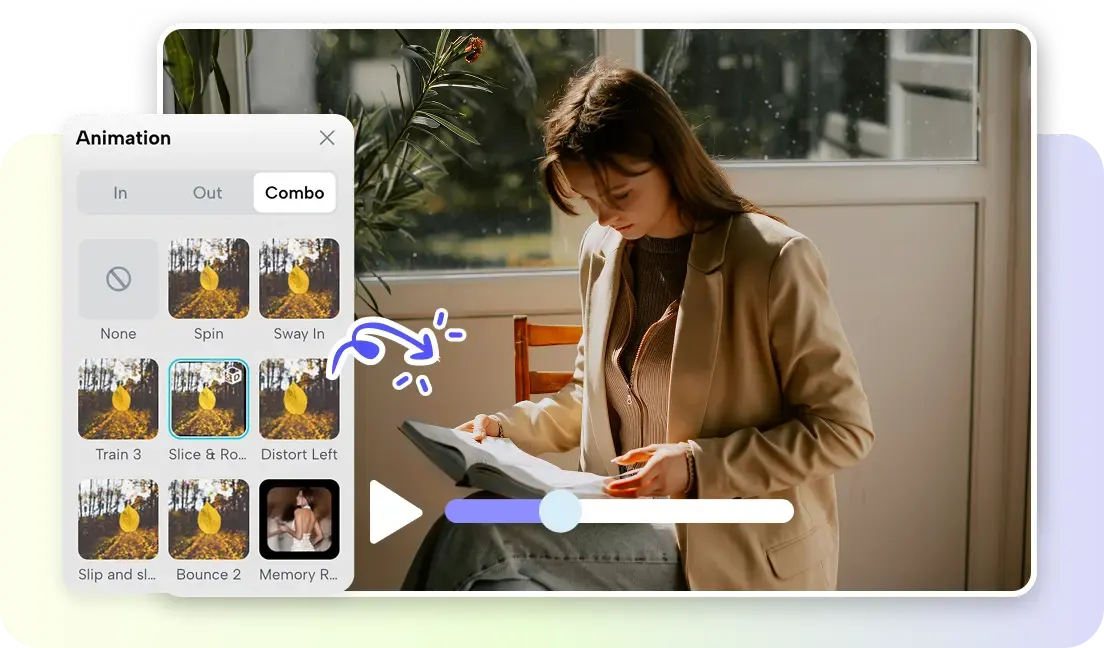
Vocabulary, pacing, visuals, examples, and priorities of messages are shaped by audience expectations. Precision, structure, and concise evidence may be valued by professional audiences. People who are watching a conversation may appreciate a more natural style and explanations that are easy to understand. Shorter phrases, faster pace, and stronger visual movement characterize energetic communication. Content for education focuses on demonstrations, explanations, and helpful product information. Aspirational messaging relates products to desired experiences or future objectives. While an AI movie can employ cinematic storytelling, ads must have a commercial purpose. The appropriateness of language, imagery, and emotional framing are also category-dependent. Demographic assumptions should never supplant audience research or evidence of a campaign. Pippit allows you to modify communication without losing brand key elements.
Turning a Single Product Idea into Multiple Creative Voices
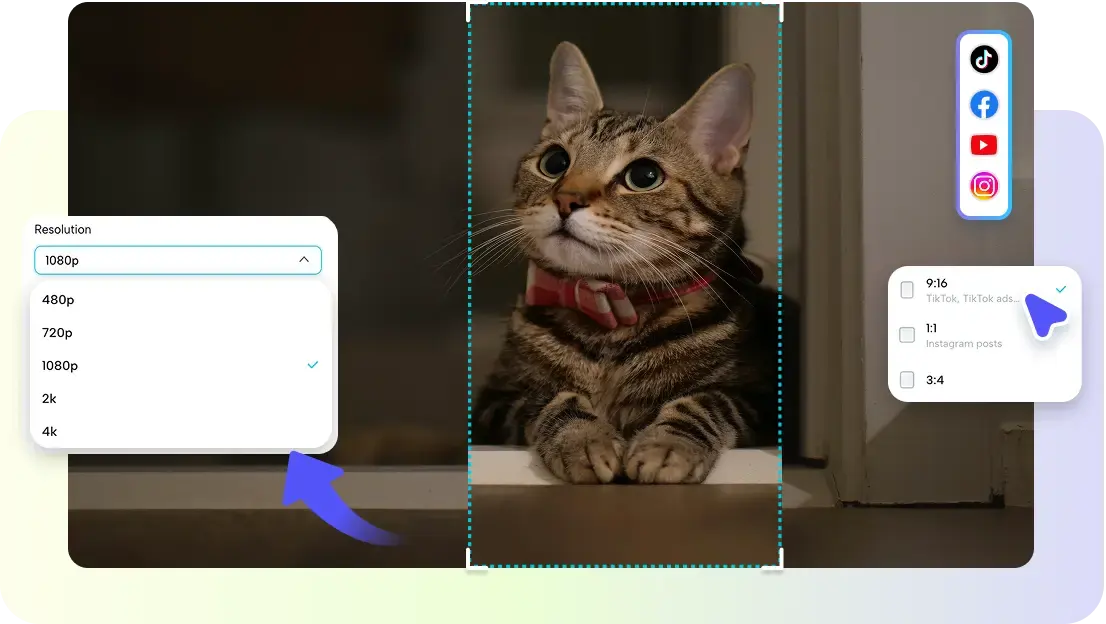
A product advantage can be used for a number of creative strategies without altering the facts. For instance, durability can be seen as a practical, exciting, educational, or aspirational attribute. Prompts can include audience, tone, pacing, visual style, key message, and desired action. This way will help you develop alternate scripts without having to rewrite each sentence manually. A story studio concept can be used to encourage narrative thinking, and structured prompts can help to focus advertising. Visuals can evolve with language, such as camera positioning, typography, transitions, and imagery. Pippit eliminates repetitive creative tasks when creating campaigns. All verified product information, claims, price, and necessary background information should be retained in each variation.

Steps to Customize Tone and Style for Your Audience via Ad Maker
Pippit’s ad maker generates videos with product information and reference media. The process begins with a well-understood creative brief that outlines the product and target audience. Tone, style, visuals, camera angles, messaging, language, subtitles, length, and aspect ratio can all be defined. Images or videos to look at can help give visual cues. Pippit can then convert these inputs into a promotional video that can be edited. Each result should be carefully reviewed as the content produced might need factual or creative edits.
Step 1: Set your audience and style
- Sign up for Pippit using your Google, TikTok, or Facebook account info.
- Open the “More” tab on the left vertical menu bar and access “Video generator”.
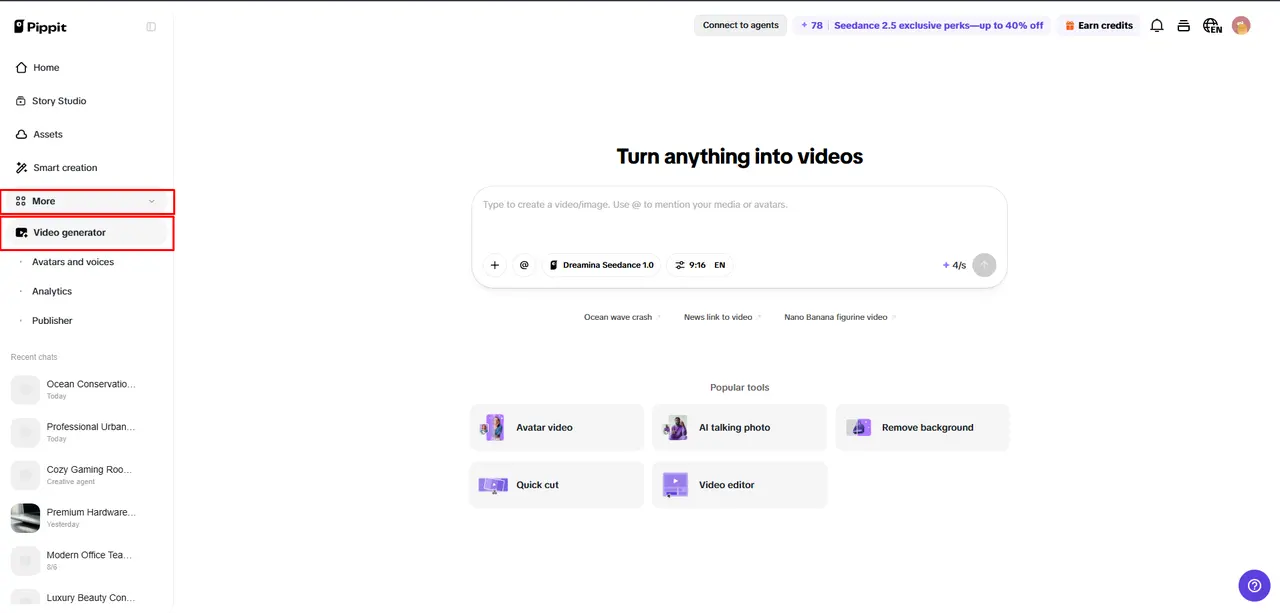
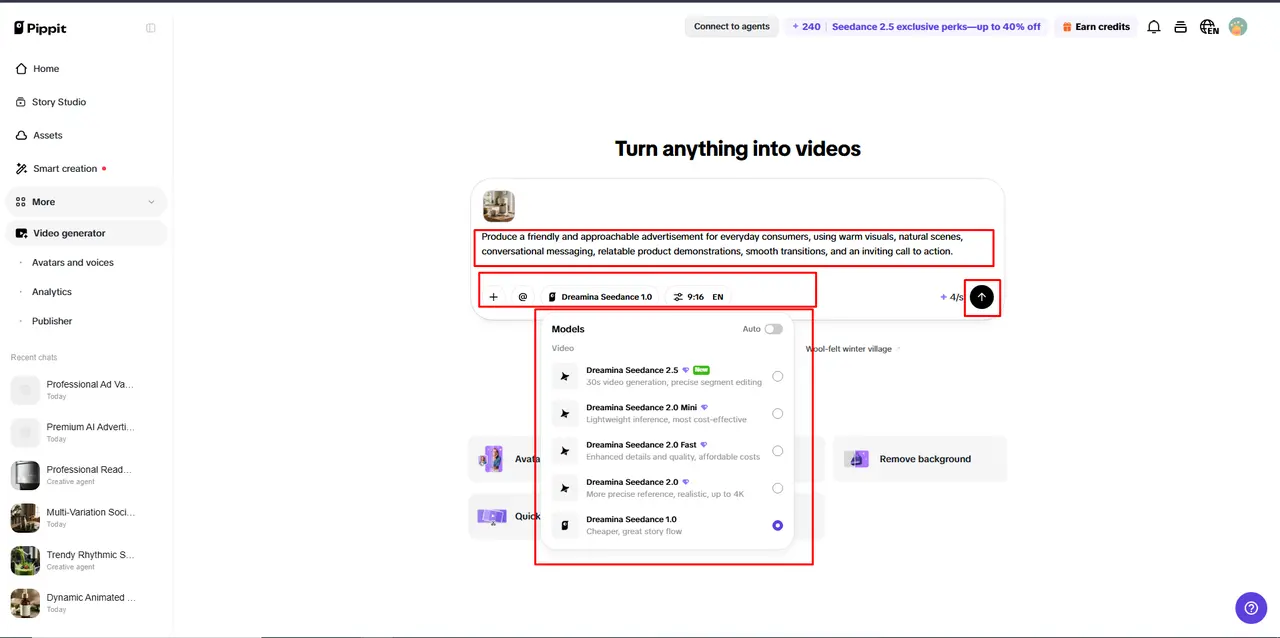
- Select an AI model, such as Dreamina Seedance 1.0, Dreamina Seedance 2.0, Dreamina Seedance 2.0 Fast, Dreamina Seedance 2.0 Mini, or Dreamina Seedance 2.5.
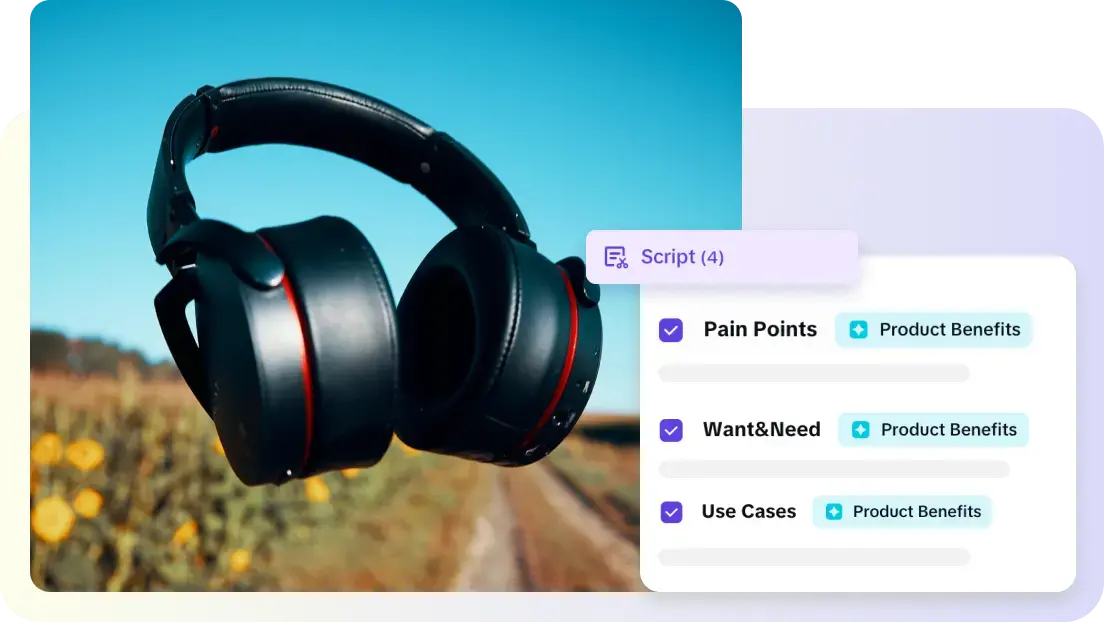
- Enter a detailed prompt describing your audience, tone, visual style, product details, camera angles, and text.
- Select the video length, language, subtitles, and aspect ratio if needed.
- Click “+” to upload reference images or videos from your device, phone, Dropbox, or a link. You can also select assets if you don’t have reference media.
- Click “Generate” once everything is added.
Step 2: Generate the styled ad
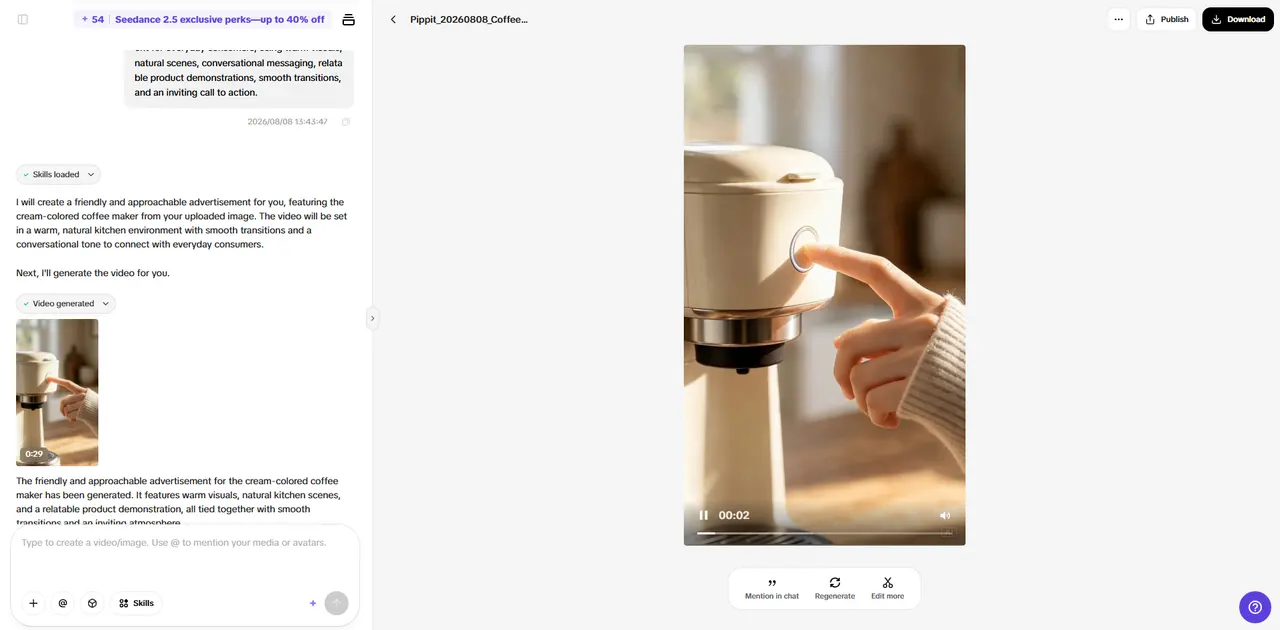
- After clicking “Generate”, Pippit’s AI video generator creates a video based on your prompt and reference media.
- The AI handles transitions, pacing, captions, avatars, voice, lyrics, and visual enhancements.
- Review the generated video ad draft for tone, style, and audience fit.
Step 3: Refine and export
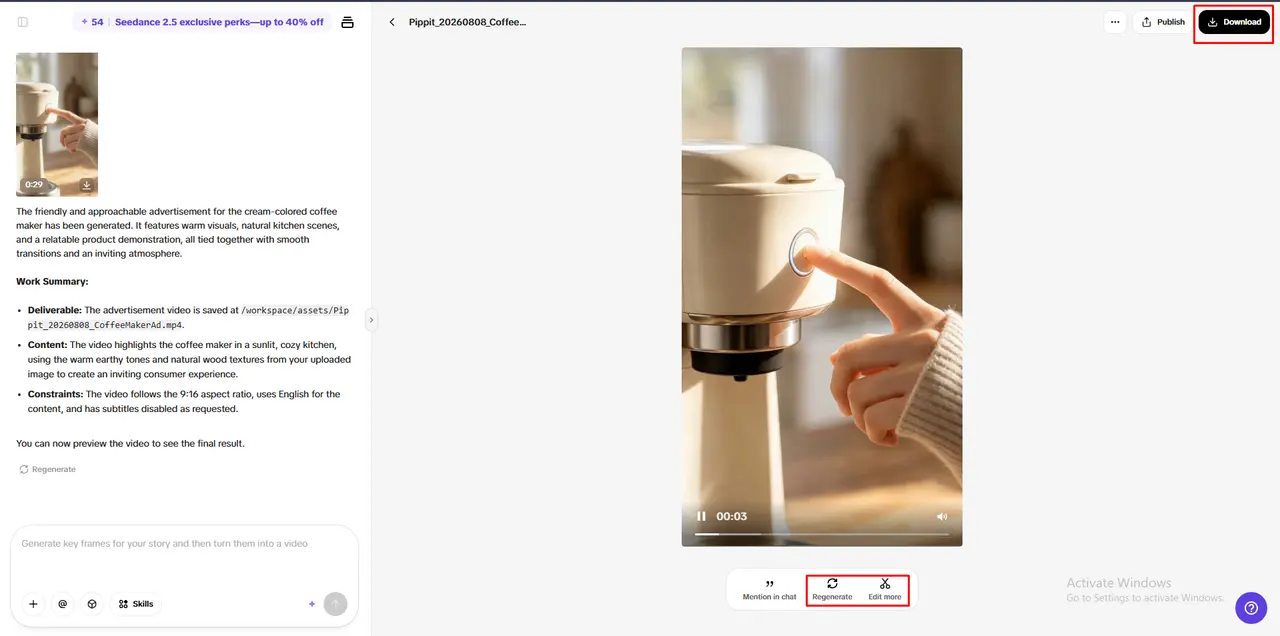
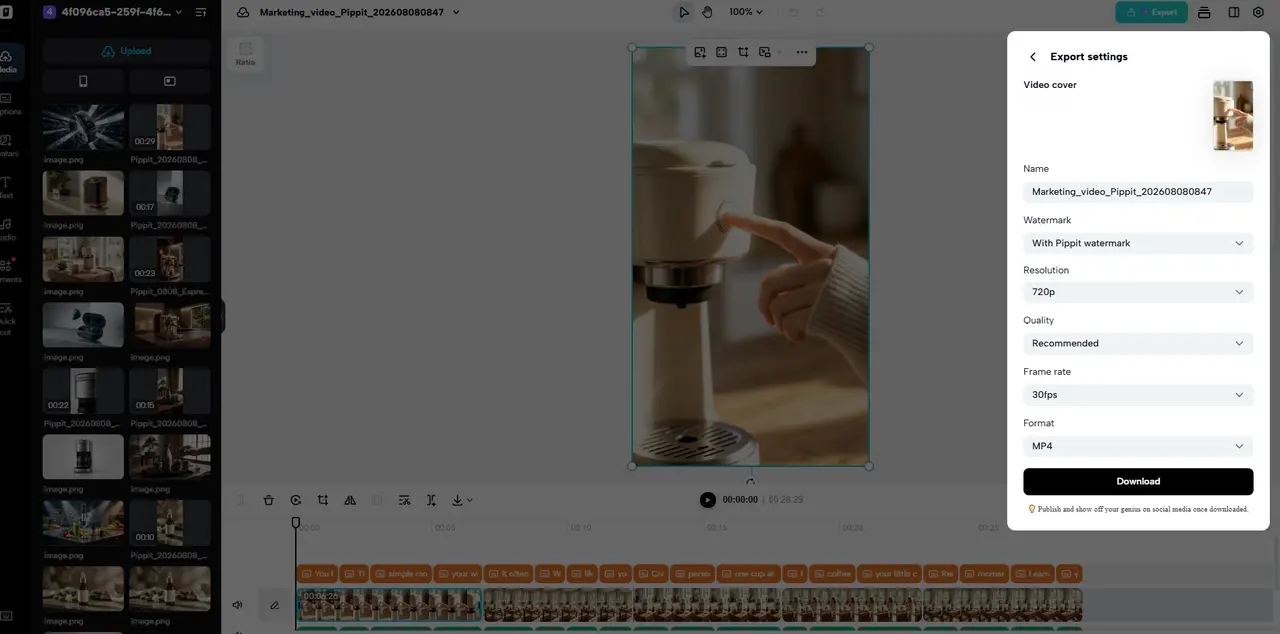
- Click “Download” on the top right to save it, “Regenerate” for another style, or “Edit more” below the video to open the Pippit editing interface.
- Edit captions, add text, and adjust size, color, alignment, filters, and effects.
- Add background music, remove backgrounds, and fine-tune the visuals.
- Click “Export” in the top right corner when finished.
- Select “Publish” to post directly to TikTok, Instagram, or Facebook, or click “Download” to save the video with your preferred format, resolution, frame rate, and quality.
Six Tone and Style Directions to Explore
Take these instructions as a starting point to develop creatively for specific audiences:
- Professional: Communicate with business in a precise way, with restrained motion and polished visuals.
- Conversational: Have natural language, friendly phrases and explanations.
- Energetic: Mix dynamic pacing, succinct use of language, movement and attention-focused changes of visuals.
- Educational: Focus on demonstrations, explanations, comparisons, and useful product information.
- Aspirational: Link product presentation to desired lifestyle, ambitions, experiences or outcomes.
- Promotional: Emphasize offers, benefits, urgency, pricing details, and clear calls to action.
Matching Tone with Visual and Audio Choices
The verbal tone should match transitions, music, typography, imagery, and visual rhythm. Rapid pacing can help to strengthen energising messages and short promotional announcements. Subtle transitions and elegant fonts can help to convey a professional or premium message. Captions should be used to supplement oral messages, but not to overload the screen. When appropriate to the campaign, avatars can be used to add human presence. Voiceovers should reflect the desired voice, enunciation, and style and pace. Background music can help to enhance emotion, but never overpower dialogue.
Localizing Tone for Multilingual Campaigns
Direct translation can result in the loss of cultural or emotional meanings, while retaining the words. Localisation involves modifying text while maintaining the product proposition and key information. Pippit is able to offer support for multilingual content creation for campaigns in different markets. Check translated captions for grammar, context, terminology, and readability before publishing. Localized ads can be linked together with consistent logos, colors, typography, and product presentation. When there are significant differences in cultural expectations, local reviewers can offer valuable context.
Maintaining Brand Identity While Personalizing Communication
Personalization should alter communication aspects while strengthening the brand identity that is still recognizable. Ensure consistency of brand terminology, visual identity, product claims, and core value propositions. Tone might change, even as factual product information doesn’t. Develop guidelines for approved language, colors, fonts, claims, imagery, and messaging boundaries that can be reused. These guidelines provide constraints for AI-generated advertisements and editing. Pippit can then help with variations without changing the core creative direction of the campaign. There is still a crucial need for human review before personalized marketing assets are published.
Conclusion
By incorporating audience-aware tone, ads can be more transparent, relevant, and engaging. Personalization doesn’t mean losing your brand identity. Customization is effective without compromising product information. Pippit enables quick video production, editing, multilingual video content, and scalable creative workflows. When paired with insights into the audience and creative decision-making, AI efficiency can lead to better advertising choices.