
Every event, conference, webinar and brand activation runs on one thing behind the scenes: coordination. Someone has to chase vendors, hold the timeline, track the budget and keep the run-of-show moving, and when nobody owns that layer, details slip and the whole production wobbles.
That someone is a production coordinator. The tricky part is deciding how to hire one, because the options range from a full-time salaried hire to a freelance marketplace to a dedicated managed coordinator, and each carries a very different cost and commitment.
Below are the best ways to hire a production coordinator in 2026, starting with the option that balances dedicated ownership and flexible cost most effectively.
How We Compared These Options
We weighed what actually keeps a production on track. Whether the coordinator is dedicated to you or shared across clients. The vetting and reliability behind them. How much management and oversight you have to provide. The flexibility to scale up for a big event and back down afterwards. And the true cost once you factor in overheads.
Competitor pricing below is approximate and drawn from public 2026 sources, so confirm current rates before you commit.
1. Wing Assistant: Best for a Dedicated, Managed Coordinator
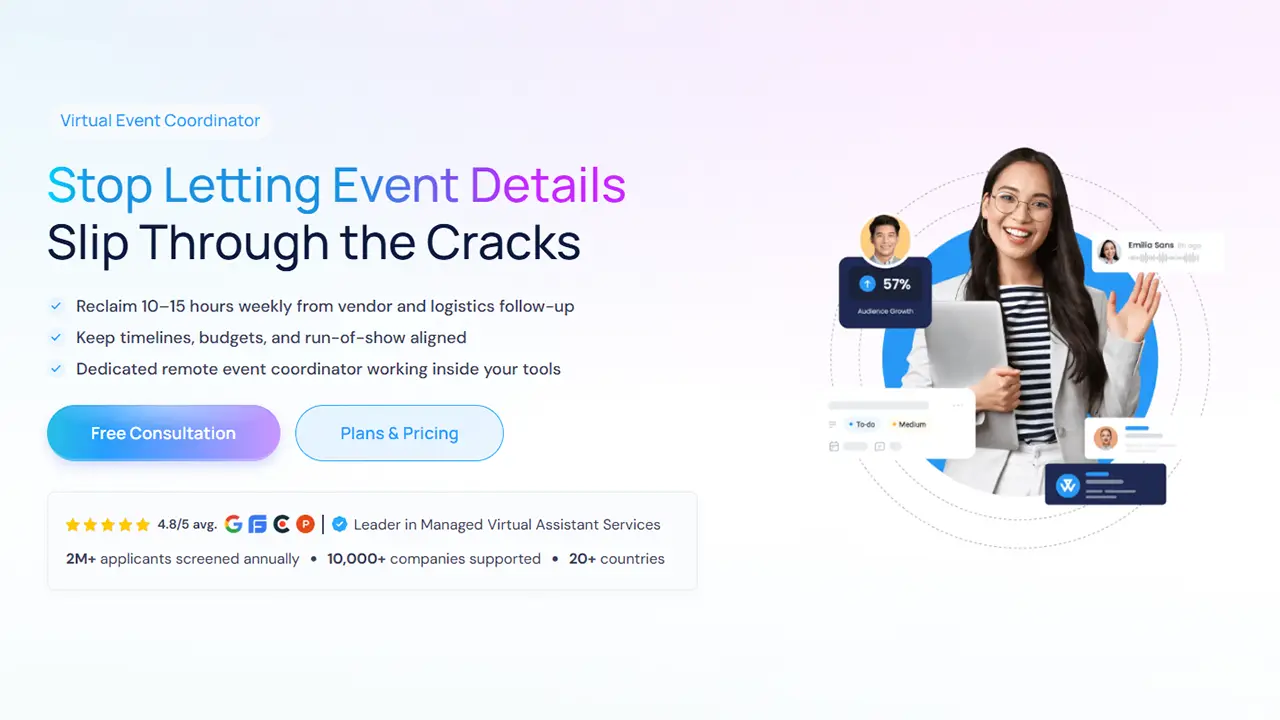
A Production Coordinator from Wing Assistant is the strongest option for teams that want one dedicated person owning the coordination layer, without the cost and commitment of a full-time hire. Rather than rotating support, you get a single coordinator who learns your playbook for vendors, timelines, budgets and run-of-show, backed by a managed support system.
The scope covers the whole production cycle. Your coordinator handles client and vendor communication, builds and tracks event budgets, reviews vendor contracts, researches and confirms venues, distributes the run-of-show, coordinates virtual staff and manages day-of changes. They also keep the admin straight, tracking RSVPs, reconciling invoices and updating the event tracker.
They work directly inside the tools you already use, such as Asana, DocuSign, Eventbrite and QuickBooks, so nothing changes about how you run your productions. Wing reports that delegating this layer reclaims 10 to 15 hours a week from vendor and logistics follow-up. Every engagement includes a dedicated Customer Success Manager, free replacement, quality supervision and the Wing Workspace app, and Wing is SOC 2 certified with signed NDAs, encryption in transit and at rest, and role-based, logged access.
Pricing is flat and flexible, starting from $1,299 per month for part-time (80 hours) and $1,999 per month for full-time (160 hours), on no-commitment monthly terms so you can scale up for peak event cycles and back down between them. Wing holds a 4.8 average across more than 200 verified reviews and supports over 10,000 businesses.
Best for: teams and agencies that want a dedicated coordinator owning production logistics at a predictable monthly cost.
2. Upwork: Best for Flexible Freelance Hiring
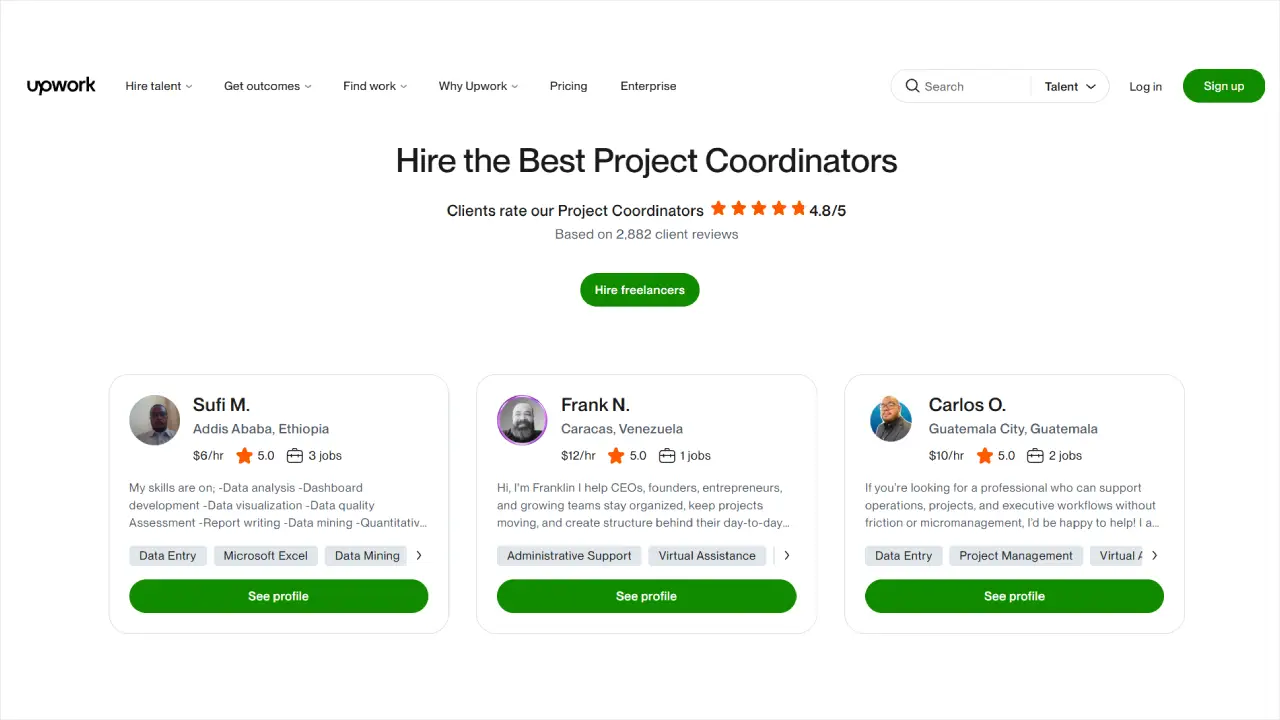
Upwork is the largest general freelance marketplace, with a deep pool of event and production coordinators available by the hour or the project. Post a brief and you will get applicants across every experience level and budget, which is useful when your needs are well defined.
The scale is also the catch, since quality varies and you handle all the vetting yourself. Rates for virtual event and production coordinators are commonly cited from roughly $24 to $45 per hour, plus the platform’s client fees. It suits one-off productions or short engagements where you are comfortable screening candidates.
Best for: well-defined, short-term productions when you are happy to vet freelancers yourself.
3. Fiverr: Best for Small, One-Off Tasks
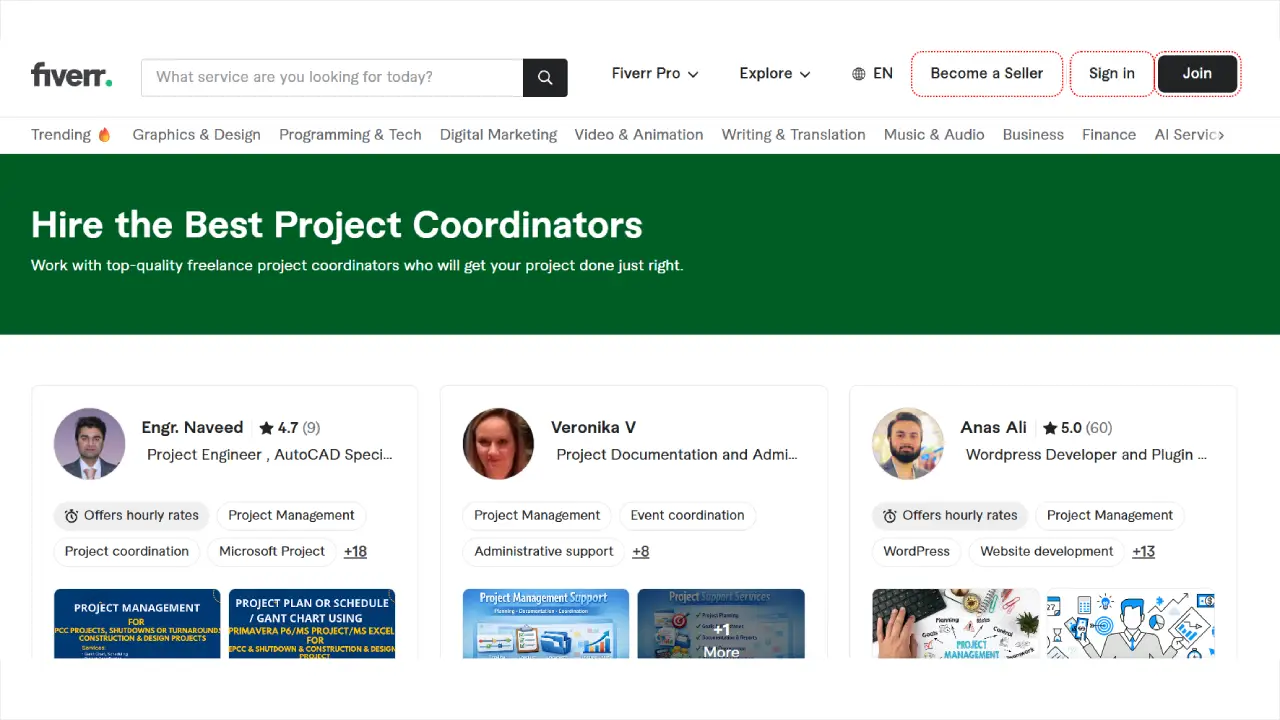
Fiverr is the go-to for quick, budget-friendly coordination tasks packaged as gigs. You browse by rating and portfolio, pick a package and pay a fixed price, which works well for a contained job like managing registrations or building a run-of-show for a single event.
Pricing is wide, with gigs commonly starting around $50 and rising for more experienced sellers, plus a small buyer service fee. It is not built for ongoing or complex productions, but for a single defined task on a tight budget it is fast.
Best for: small, one-off coordination tasks on a limited budget.
4. Toptal: Best for High-End Productions

Toptal positions itself as a network of the top 3 percent of freelance talent, screened through a rigorous process. For a major production that needs a seasoned coordinator or project manager, its vetted pool removes the recruitment legwork.
That calibre carries a premium, with rates well above general marketplaces and the platform’s fee structure on top. It is aimed at organisations with the budget to match the level of talent.
Best for: large or high-stakes productions that need senior, pre-vetted talent quickly.
5. In-House Hire: Best for Constant, High-Volume Demand

If you run productions constantly, a full-time in-house coordinator gives you someone always on hand and fully immersed in your brand. It is the traditional route, and for high-volume teams it can make sense.
The cost is the trade-off. Public salary data puts a virtual production coordinator around $25 to $27 per hour, with event producers often earning $45,000 to $80,000 a year, before you add benefits, payroll overhead and the recruitment time to fill the role. A wrong hire is expensive to unwind.
Best for: organisations with constant, year-round production volume that justifies a permanent salary.
How to Choose the Right One
Start with your volume and how hands-on you want to be. A single event fits a freelancer through Upwork or a Fiverr gig, a major production justifies Toptal’s calibre, and constant volume can warrant an in-house hire. If you run productions regularly but do not need a full-time salary, a dedicated managed coordinator gives you ownership without the overhead.
Then weigh vetting and continuity. If you cannot screen coordinators yourself, favour a vetted or managed option, and check that whoever you hire works inside your existing event tools. Always compare the true cost, including platform fees, benefits and your own management time, rather than the headline rate.
The Bottom Line
The right way to hire a production coordinator depends on how often you run productions and how much of the management you want to carry. Marketplaces like Upwork and Fiverr suit one-off needs, Toptal serves premium projects, and an in-house hire fits constant demand.
But for teams and agencies that want a dedicated coordinator owning every vendor, timeline and run-of-show at a flat, flexible monthly rate, Wing Assistant is the strongest place to start.