A student explains a complicated concept perfectly but struggles when the teacher asks a basic follow-up question. Another submits unusually polished work and then finds it difficult to explain it in their own words. OpenAI India ChatGPT turns these familiar classroom moments into the central idea of its Teachers’ Day campaign for 2026.
Titled “Teachers know more than you think | Happy Teacher’s Day”, the brand film was released in India on September 5, 2026. Created with The New Thing, the campaign looks at one of the most relevant questions around ChatGPT and education: what happens when students use AI to complete their homework without actually understanding it?
The film does not treat AI use as the problem. It focuses on the gap between getting an answer and knowing the answer.
Teachers Know More Than You Think
The creative idea is built around something every teacher has: familiarity with their students.
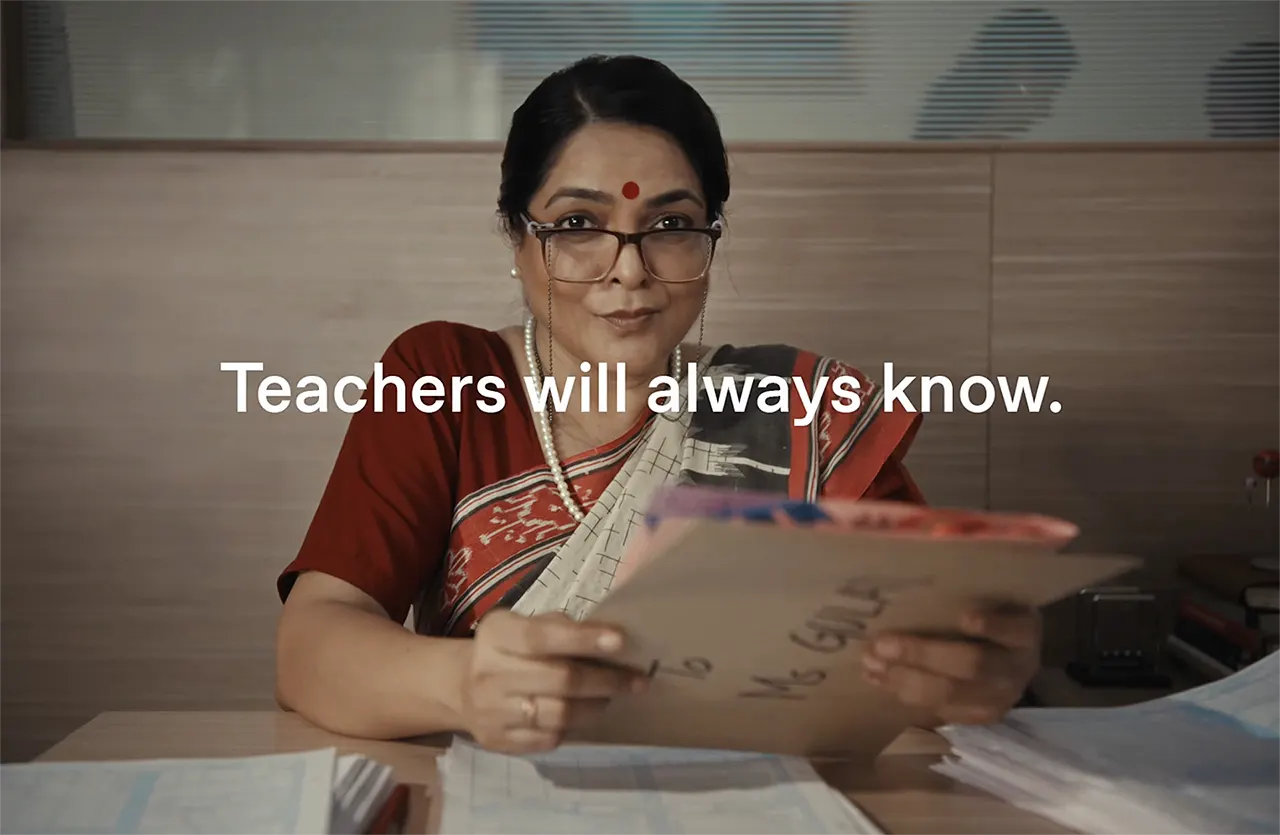
Students in the film appear confident because they have access to AI. They can produce sophisticated answers and polished work, but their teachers recognise when something does not sound or feel like their usual work.
That is where the humour comes from.
The students believe they have found a clever shortcut. The teachers have already noticed the difference.
It is an effective way to talk about AI homework without turning the film into a lecture about cheating. The campaign keeps the situation grounded in everyday classroom behaviour, making the message easy to understand even for viewers who are not closely following the debate around generative AI in education.
The teacher becomes the person who can tell whether a student has actually understood the subject.
ChatGPT Teachers Day Campaign 2026 and the AI Homework Question
The campaign becomes more interesting when viewed alongside OpenAI’s broader approach to teenagers and education.
OpenAI introduced ChatGPT for Teens in August 2026, with features designed around learning, critical thinking and additional protections for younger users. These include Study Mode, responsible homework reminders, quizzes and learning visualisations. Study Mode is designed to guide students through questions and steps rather than simply hand over an answer. OpenAI: ChatGPT for Teens
That context gives the ChatGPT Teachers Day campaign 2026 a more specific purpose.
The message is not that students should stop using ChatGPT. It is that students should use AI in a way that keeps them involved in the learning process.
There is an important distinction between asking ChatGPT to complete an assignment and asking it to explain why an answer is correct.
The first can produce a finished piece of homework. The second can help produce understanding.
For an AI brand communicating about education, that distinction matters.
ChatGPT for Teens Changes the Conversation
AI has already become part of how many students search for information, understand difficult subjects and work through problems. The challenge is making sure convenience does not replace learning.
ChatGPT for Teens addresses this through features intended to encourage students to work through problems rather than simply copy a solution. OpenAI’s Study Mode, for example, uses guided questions and step-by-step explanations to keep the student engaged with the subject. OpenAI’s ChatGPT for Teens announcement
The Teachers’ Day film fits neatly into that conversation.
Instead of telling students that AI has no place in school, it gives them a reason to think about how they are using it. The film essentially asks a simple question: if your teacher asks you to explain your answer, can you?
That question is harder to outsource.
Why the ChatGPT Teachers Day Campaign 2026 Works
The smartest creative decision is making teachers the centre of the story.
The campaign could have focused on school rules, parents or academic cheating. Instead, it chooses the person who knows the student’s normal behaviour, writing style and level of understanding.
That makes the idea feel human rather than technical.
There is also a nice contrast at work. Students use sophisticated technology to make their work look better, while teachers rely on something much simpler: knowing their students.
The campaign also avoids presenting teachers and AI as opposing forces. That is important for OpenAI. Its wider education messaging positions ChatGPT as something that can support learning, while the student still needs to do the thinking.
The film therefore works on two levels. On the surface, it is a playful Teachers’ Day story about students trying to get one past their teachers. Underneath, it is a message about responsible AI use in education.
A Teachers’ Day Campaign With a Clear Point of View
Teachers’ Day advertising often relies on appreciation, nostalgia and emotional stories about educators. OpenAI India ChatGPT takes a more contemporary route.
It celebrates teachers by showing what makes their role difficult to replace.
Information is now available almost instantly. Answers can be generated in seconds. But a teacher can recognise when an answer belongs to the student and when it does not.
That gives the campaign a relevant tension without making exaggerated claims about AI.
For students, the takeaway is straightforward. ChatGPT can help explain a subject, ask questions, guide practice and make difficult concepts easier to understand. But using it to avoid understanding the work defeats the purpose of learning.
The ChatGPT Teachers Day campaign 2026 makes that point through a classroom joke rather than a warning.
And the joke lands because the teacher already knows.