Building a voice AI agent that feels responsive is not simply a matter of choosing a fast language model. The caller’s experience depends on the entire path between the phone network, speech recognition, inference, text-to-speech and orchestration.
That makes infrastructure an important part of the equation.
For teams building voice agents, useful factors to examine include network architecture, latency, turn-taking, telephony options, integrations, monitoring, compliance and how much of the stack the platform controls.
Three providers illustrate different approaches: Telnyx, Retell AI and Synthflow.
What to Look For in Low-Latency Voice AI Infrastructure
Latency is only one part of the experience. A useful evaluation should also consider:
- End-to-end network and infrastructure architecture
- Vendor-stated latency measurements
- Speech recognition and text-to-speech options
- Turn-taking and interruption handling
- Telephony and SIP compatibility
- Integrations and developer tools
- Monitoring and quality assurance
- Security and compliance options
- Languages and geographic availability
The right choice ultimately depends on the workload, existing systems and degree of control a team needs.
1. Telnyx
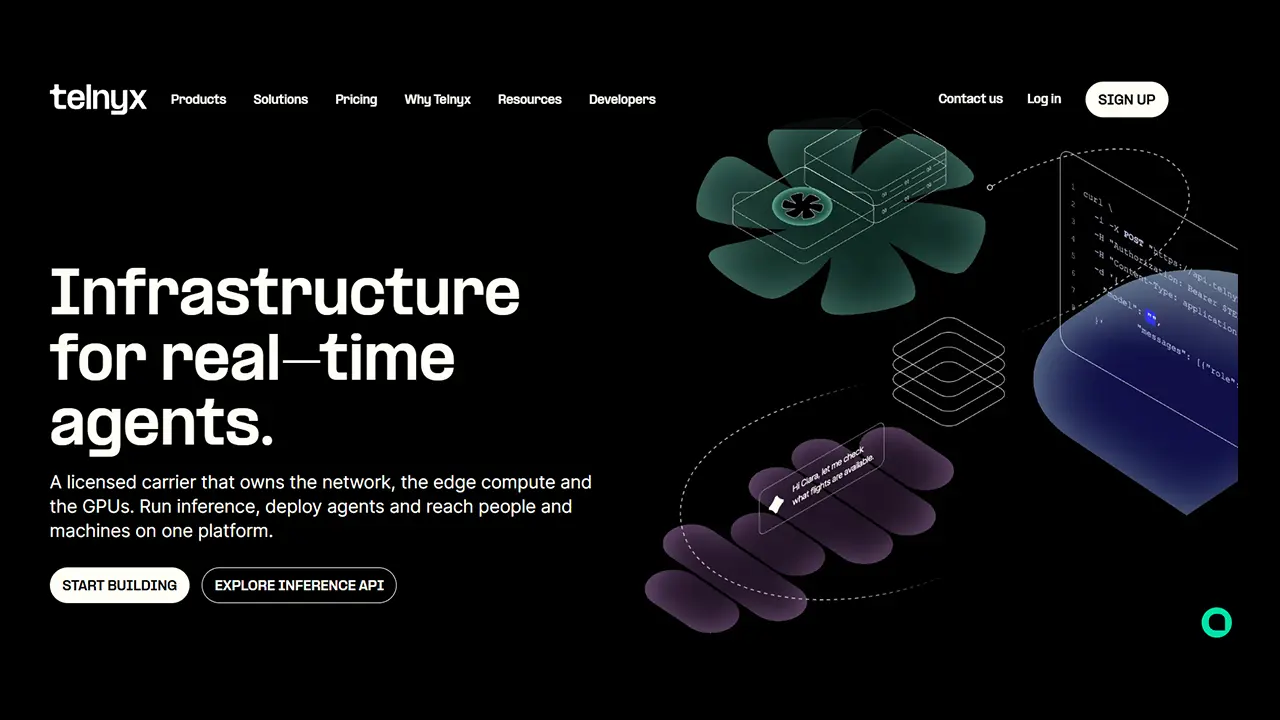
Telnyx takes a vertically integrated approach, combining carrier infrastructure, telephony, speech services and inference on one platform. Its architecture places GPU infrastructure alongside telephony infrastructure, with the company stating sub-200ms response times for its Voice AI platform and sub-100ms inference on its own GPUs.
For developers evaluating Voice AI Infrastructure, the platform also offers OpenAI-compatible endpoints, multiple speech engines, observability and integrations.
What stands out
- Carrier and AI infrastructure under one platform
- Vendor-stated sub-200ms Voice AI response times
- Sub-100ms inference on Telnyx infrastructure
- End-to-end tracing and latency visibility
- Multiple STT and TTS options
- Licensed-carrier coverage across 45+ countries
- Support for enterprise security and compliance requirements
The main appeal is architectural control. Keeping more of the call path within one infrastructure provider can reduce the number of external components involved when diagnosing latency.
2. Retell AI
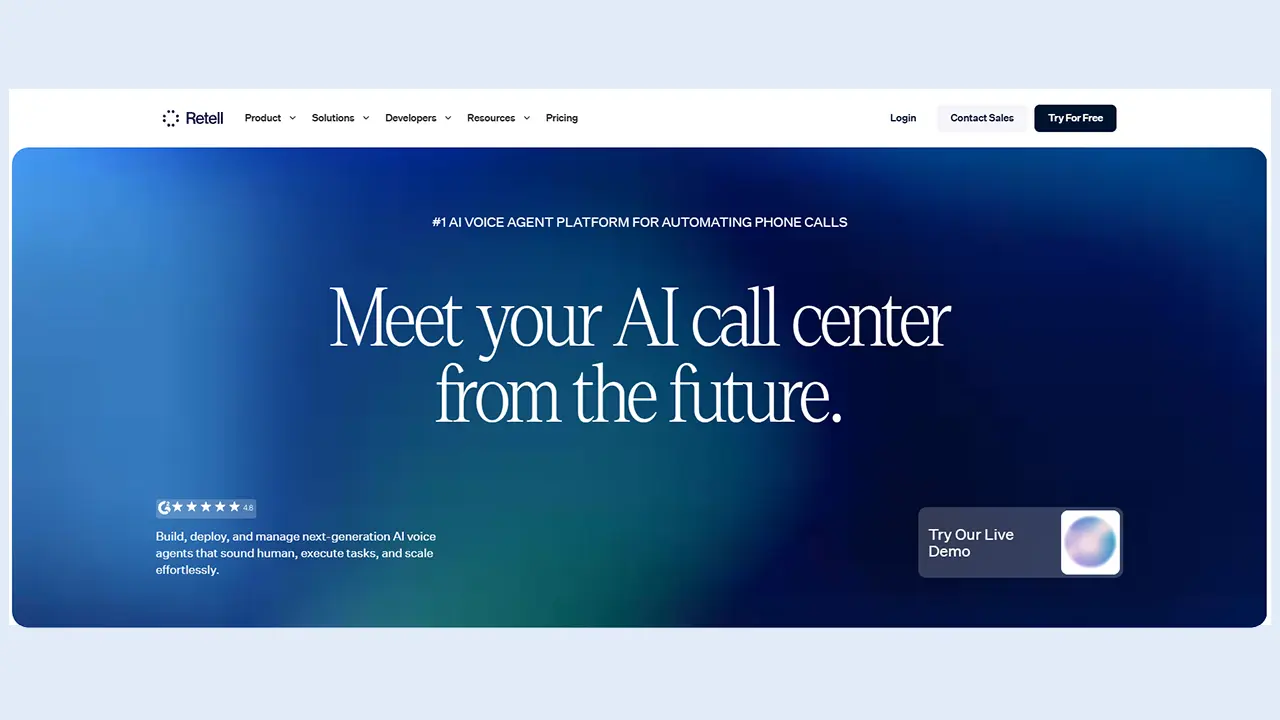
Retell approaches the problem from the voice-agent platform side. Its focus is on building, deploying and operating production voice agents, particularly for customer service and call-center workflows.
The company states roughly 600ms end-to-end latency and highlights proprietary turn-taking designed to handle interruptions and conversational pauses.
Its platform also includes tools for inbound and outbound campaigns, call transfers, live monitoring, testing, transcription and post-call analysis.
What stands out
- Voice-agent development and deployment tools
- Drag-and-drop workflow building
- Inbound and outbound campaign controls
- Live listen-in and takeover capabilities
- Call transfers and human handoffs
- Testing and regression workflows
- Post-call analysis and QA
- Enterprise security and compliance features
For teams where operational control matters as much as raw latency, Retell’s emphasis on monitoring and call-center workflows may be particularly relevant.
3. Synthflow
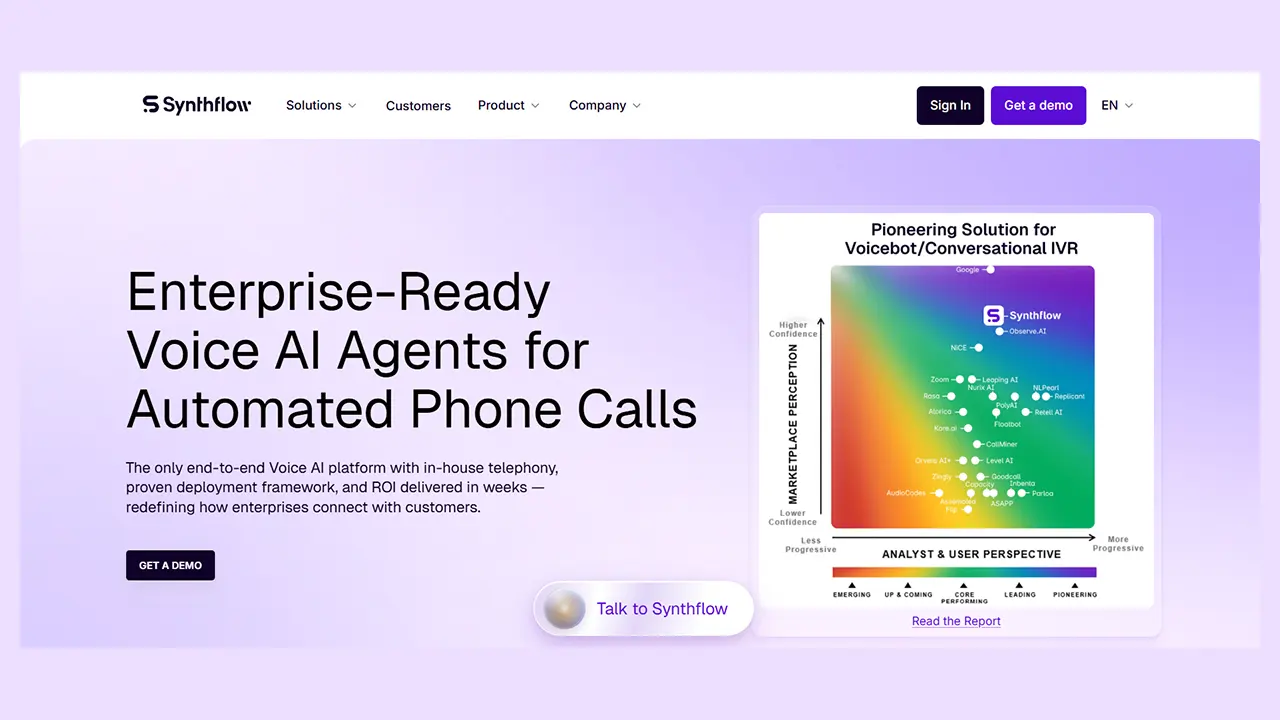
Synthflow takes an enterprise-oriented approach built around its BELL framework: Build, Evaluate, Launch and Learn.
The framework connects agent development with simulation, deployment and ongoing monitoring rather than treating production as the end of the development process.
Synthflow also supports existing enterprise environments through SIP and telephony integrations, with the platform offering a broad range of CRM, contact-center and business integrations.
What stands out
- BELL lifecycle for building and operating agents
- Visual workflow design
- Simulation before deployment
- SIP and telephony connectivity
- Enterprise CRM and CCaaS integrations
- Multi-agent workflows
- Versioning and rollback
- Monitoring and automated QA
This approach is particularly relevant for organisations that need voice AI to work alongside an existing contact-center or enterprise communications environment.
The Bigger Question Is the Entire Call Path
There is no single latency number that tells the whole story.
A voice agent can have fast inference but still feel slow if audio travels through multiple services before reaching the model. Conversely, a platform with strong orchestration and monitoring may be a better operational fit even when its headline latency figure is not the lowest.
That is why teams should test voice infrastructure using their own calls, prompts, models, geography and integrations.
Telnyx, Retell AI and Synthflow demonstrate three different approaches: infrastructure integration, production voice-agent operations and enterprise lifecycle management.
The better choice is ultimately the one that matches how the voice system will actually be built, deployed and operated.