
The NHS Care Doesn’t Come in Prescriptions campaign explores a side of illness that medicine alone cannot address: the need for human connection. A prescription can tell you what medicine to take. It can help treat an illness, manage pain and support recovery. But can it prescribe someone to hold your hand when you’re frightened? Or make you laugh when a difficult day feels unbearable?
This thoughtful healthcare advertising campaign reminds us that some of the most meaningful forms of care come from the people who stay beside us.
The Things Medicine Cannot Prescribe
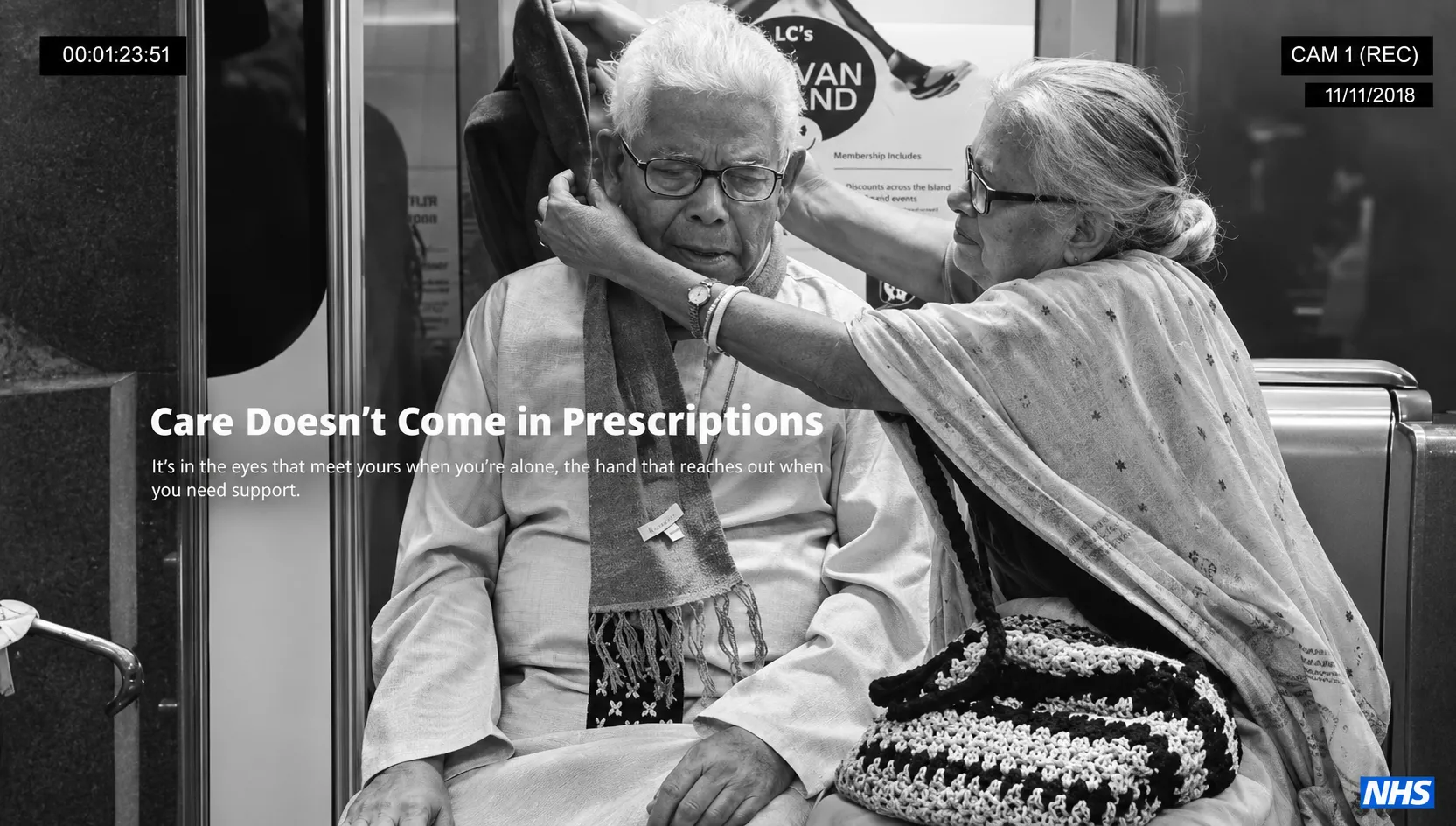
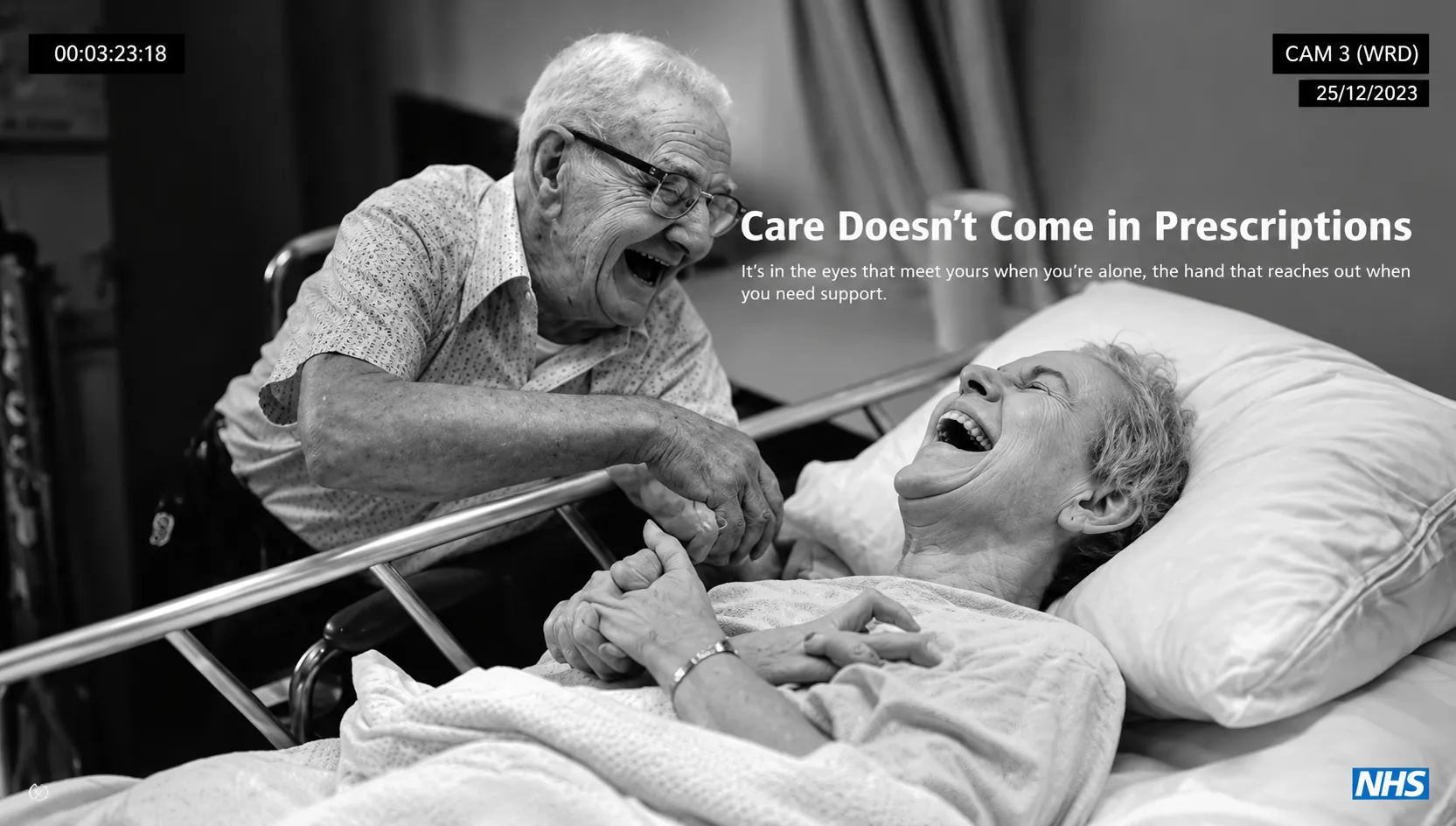
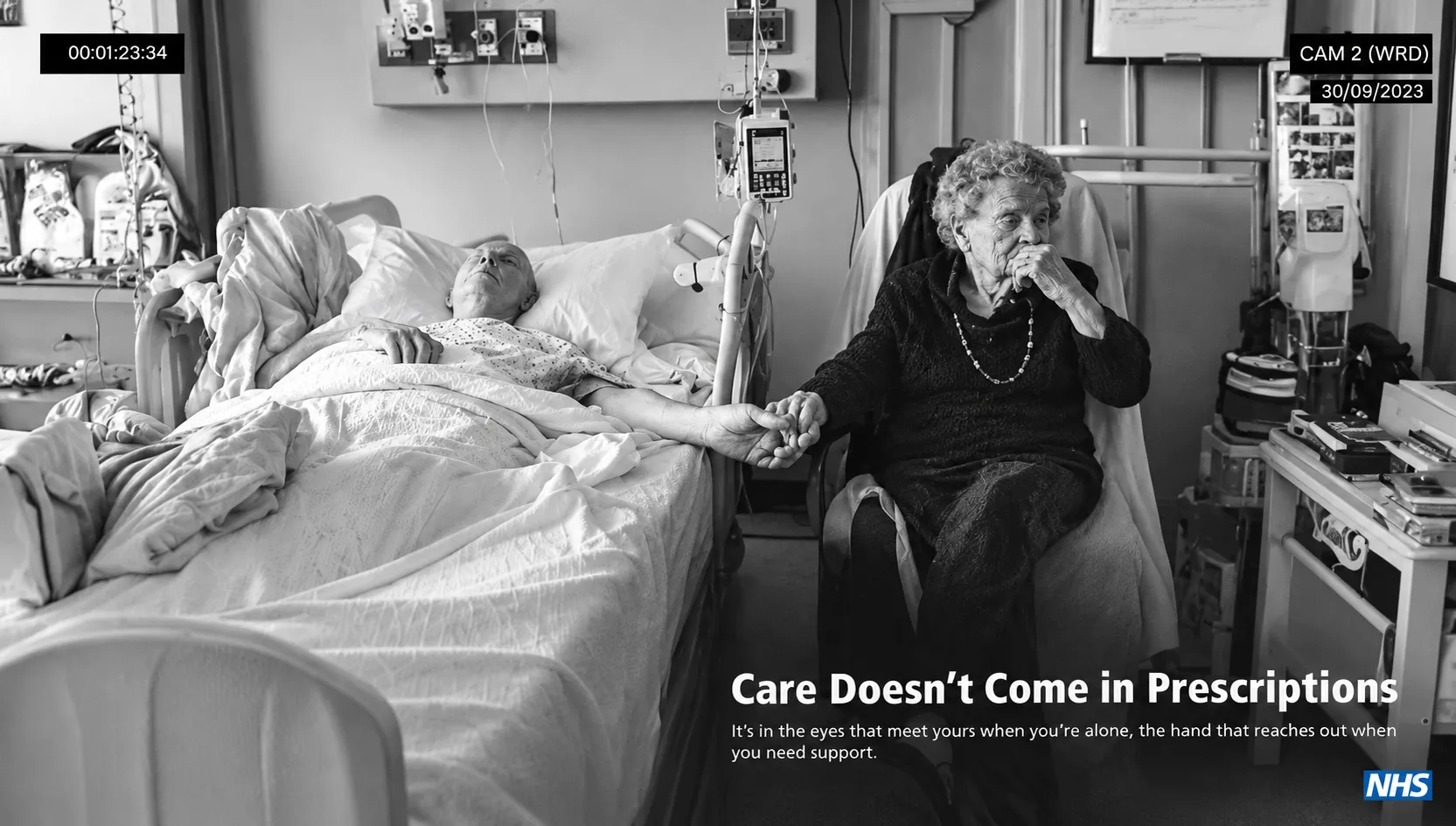
The campaign captures intimate moments between patients and their loved ones in hospital settings. An elderly woman holding the hand of someone lying in a hospital bed. An elderly man sharing a moment of laughter with a patient. A woman gently helping an older man with his scarf.
There is no complicated storytelling here. Just familiar gestures of affection, companionship and support.
Yet these moments carry a powerful message. When someone is unwell, the experience is about more than medication and medical treatment. Having someone beside you, offering reassurance or simply making you smile, can make a difficult moment feel a little less lonely.
A Different Way of Looking at Hospital Life
One of the most distinctive aspects of the NHS Care Doesn’t Come in Prescriptions campaign is its visual treatment.
The photographs are presented in black and white, with camera labels, dates and timestamps that create a CCTV-inspired documentary aesthetic. Rather than looking like conventional healthcare advertisements, the images feel like glimpses into private moments that might otherwise go unnoticed.
The approach gives the ordinary gestures at the centre of the campaign a sense of importance. A hand reaching out, a shared laugh or a moment of quiet companionship becomes the story.
Because Being There Matters
The campaign makes a simple but meaningful point: medical treatment is essential, but it cannot replace the comfort of a familiar face or the reassurance of someone who cares.
Healthcare advertising can communicate this human side of care in different ways. Campaigns such as The Cheering Bandage by Facebook also recognise the people working on the frontlines of healthcare, while Fortis Healthcare’s More to Give approaches healthcare through the idea of organ donation.
For anyone visiting a loved one in hospital, the NHS also provides practical guidance on visiting someone in hospital.
Sometimes, the most meaningful thing you can do for someone is simply be there. And that is something no prescription can provide.


