
The Sometimes The Greatest Healers Don’t Wear Uniforms campaign by NHS shines a light on the people who care for us beyond hospital wards and medical uniforms. Through intimate black-and-white photographs, it captures the everyday gestures of love and kindness that can make difficult moments a little easier for someone who is unwell.
The People Behind the Quiet Acts of Care
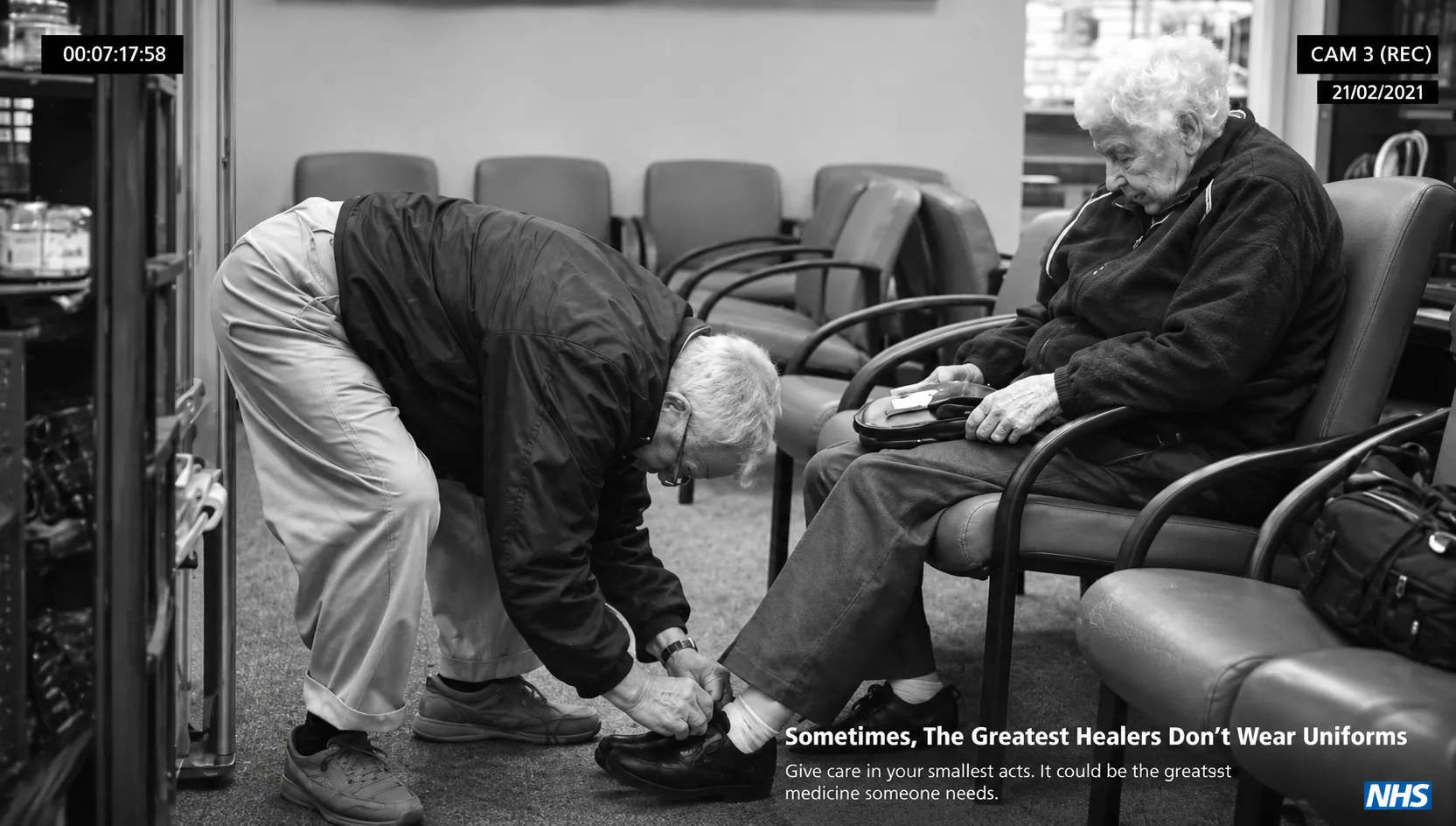
The campaign tells its story through intimate moments between patients and their loved ones.
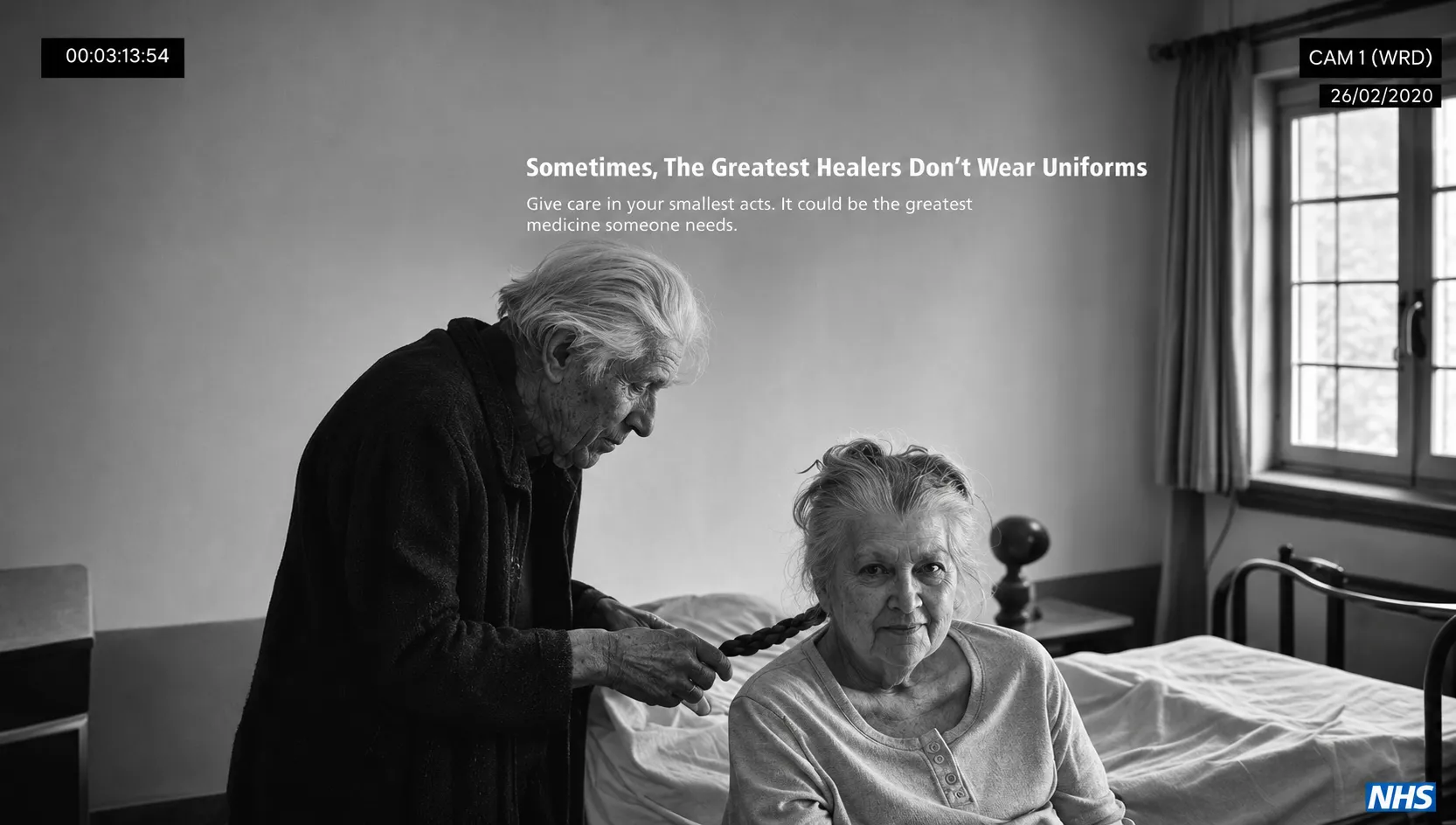
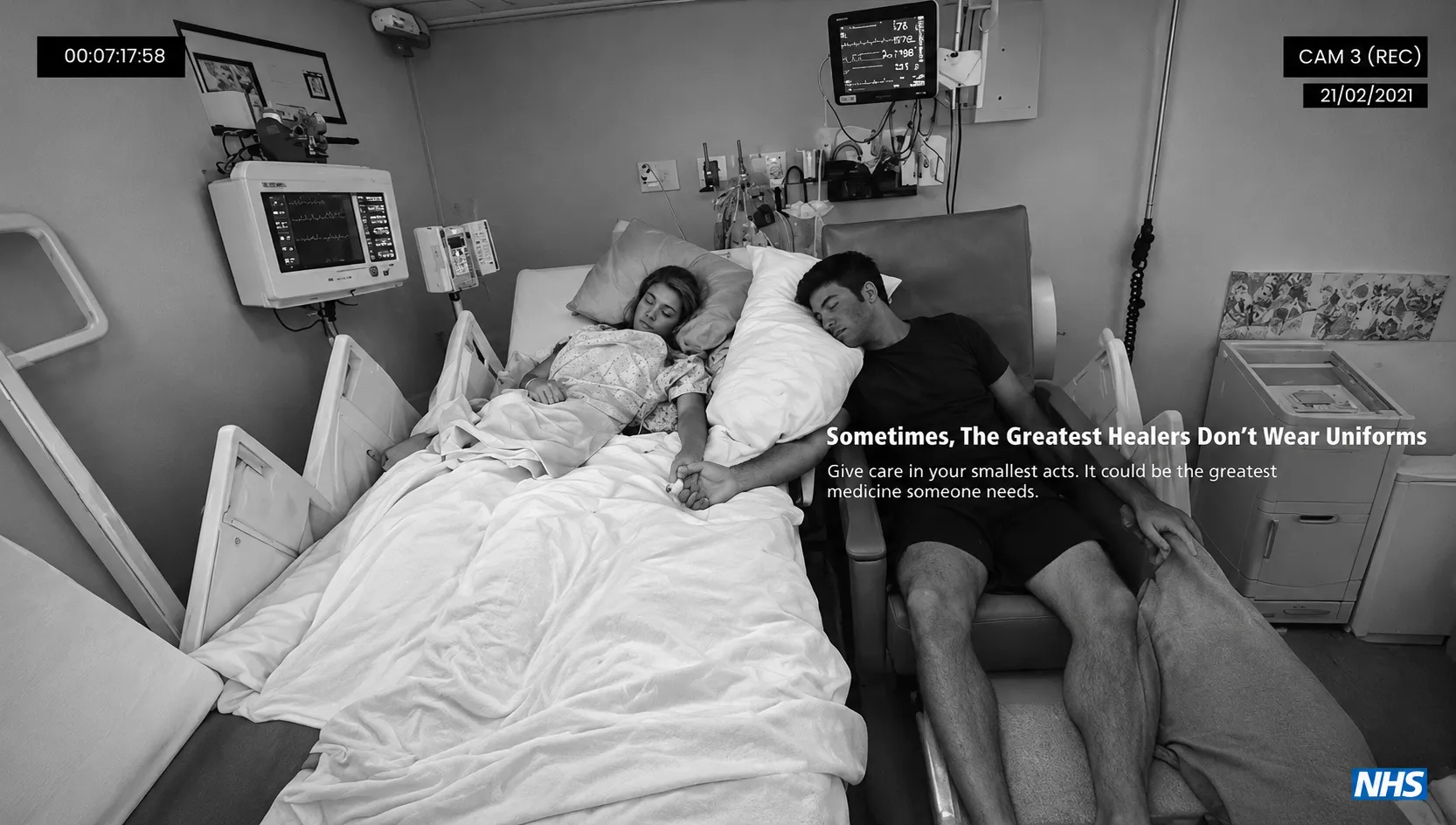
One photograph shows an elderly man gently braiding a woman’s hair. Another captures a young man resting beside a hospital patient, their hands held together.
Neither scene involves a medical procedure or a dramatic intervention. They show something much more familiar: people looking after people they love.
The accompanying line, “Give care in your smallest acts. It could be the greatest medicine someone needs”, brings the message into focus.
It recognises that caring for someone does not always require extraordinary gestures. Sometimes, it means offering a little help, staying close or making someone feel less alone.
The Beauty of Unstaged Moments
The Sometimes The Greatest Healers Don’t Wear Uniforms campaign finds its message in ordinary acts of compassion, showing that care can come from the smallest gestures.
Its photographs use black-and-white imagery with a CCTV-inspired visual treatment. Camera identifiers, timestamps and dates give the scenes the appearance of moments captured in everyday hospital life.
This visual choice keeps the attention on the people and their interactions. There is no elaborate visual metaphor to decode and no dramatic storytelling competing with the message.
The photographs allow simple acts of affection and companionship to do the talking.
Not Every Healer Wears a Uniform
The campaign’s most meaningful contribution is its recognition of the people who provide care outside the formal healthcare system.
Doctors and nurses play essential roles in treating patients. But loved ones bring a different kind of support through their presence, affection and everyday acts of kindness.
A similar thought appears in another NHS campaign, Care Doesn’t Come in Prescriptions, which highlights how a familiar face, a reassuring touch and the presence of loved ones can offer comfort that medicine alone cannot provide.
Sometimes, the smallest act of care can mean the most to someone who needs it. And sometimes, the greatest healers don’t wear uniforms.


