
On the International Day of Persons with Disabilities, Zomato Shows How Gratitude Should Feel
Great advertising doesn’t always shout. Sometimes, it pauses—listens—and lets a simple human truth do the talking. That’s exactly what Zomato achieves with its latest campaign for the International Day of Persons with Disabilities.
Instead of dramatic storytelling or heavy-handed messaging, the brand chooses something far more affecting: silence. And within that silence, it tells a story about acknowledgement, dignity, and how small gestures can change someone’s entire day.
A Day Like Any Other—Until It Isn’t
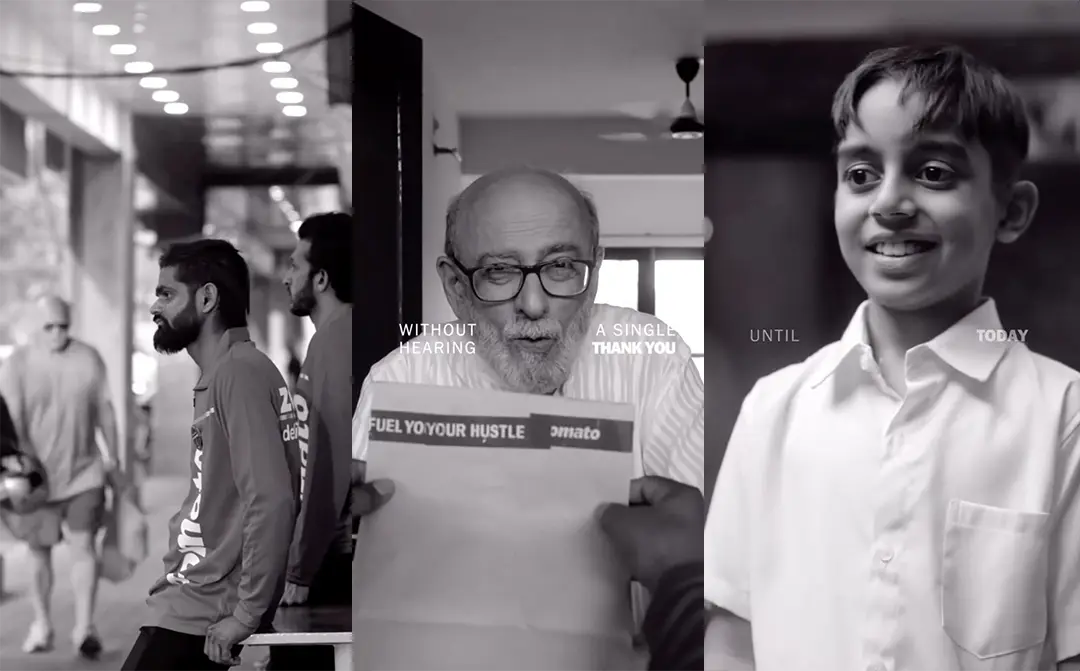
The film follows Rakesh, a hearing-impaired delivery partner from Chennai, as he goes about his everyday routine. He weaves through traffic, reaches doorsteps, hands over food, and moves on to the next order.
Customers smile. Some say “thank you.” Others nod politely.
On paper, everything is perfect.
But the film gently reveals the disconnect. The gratitude exists—but it never quite reaches Rakesh. Each interaction carries good intent, yet leaves behind an unspoken distance. The camera lingers just long enough for viewers to feel what he feels: being present, but not fully acknowledged.
It’s an uncomfortable truth many of us never think about—and that’s what makes it powerful.
The Moment That Breaks the Silence
Then comes a small but unforgettable shift.
At one doorstep, a young customer greets Rakesh using a simple sign language gesture. No words. No explanation. Just recognition.
The child learned the sign from a tutorial on the Zomato app, created to help customers thank delivery partners with hearing and speech impairments. The moment lasts only seconds, but it carries the emotional weight the entire film has been building toward.
Rakesh’s reaction says everything. The silence that once felt isolating now feels understood.
One Story, Thousands of Real Lives
While the film centers on Rakesh, it reflects the lived experiences of more than 1,000 hearing and speech-impaired delivery partners on the platform. As of October 2025, Zomato has onboarded over 5,000 delivery partners with disabilities, making inclusion an active practice rather than a symbolic promise.
This isn’t a one-off campaign built for a calendar date. It’s a glimpse into a workforce that moves through cities every day, often unseen beyond the transaction.
Purpose That Goes Beyond the Screen
What makes the campaign resonate even more deeply is what sits behind it. The story is supported by real systems and long-term efforts, including:
- Accessibility-focused technology improvements
- Sensitisation programs for customers and partners
- Specialised training for fleet coaches
- Dedicated grievance-redressal mechanisms
- Higher earning potential per kilometre for PwD delivery partners
These initiatives quietly reinforce the film’s message: dignity isn’t just emotional—it’s structural.
Why This Campaign Feels Different
In a space crowded with purpose-driven messaging, this campaign stands out because it doesn’t try to impress—it tries to connect.
- It trusts the audience to feel rather than be told
- It turns inclusion into action, not just awareness
- It reframes appreciation as something that must be accessible to everyone
Most importantly, it reminds viewers that empathy doesn’t require grand gestures. Sometimes, it’s as simple as learning one sign.
Closing Thought: Advertising That Listens
Zomato’s campaign is a quiet lesson in modern brand storytelling. By focusing on what often goes unnoticed, it shows how meaningful change begins—not with campaigns, but with everyday choices.
A doorstep. A delivery. A single gesture.
And suddenly, a “thank you” finally lands where it matters most.
