Popunders have been around long enough that some advertisers write them off as old-school. That’s a mistake. A popunder ad network still delivers some of the highest traffic volumes in performance marketing: Adsterra alone serves 12 billion monthly pop impressions across verticals from iGaming to VPN to e-commerce. The format is simple, the intent is direct, and the results, with the right setup, hold up. What popunder ads are, how to buy popunder traffic without burning budget, and what separates a working campaign from a wasted one: that’s what this piece is about.
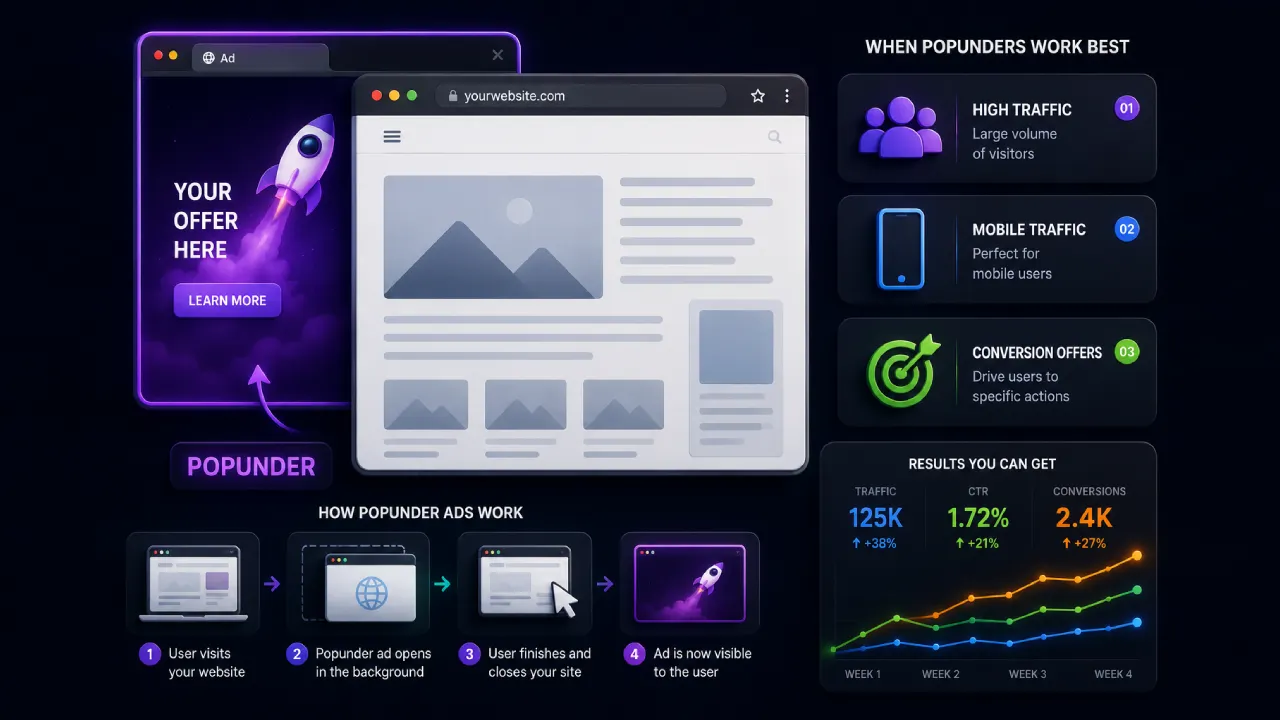
How Popunder Ads Work
A popunder opens in a new browser tab behind the current page. The user finishes what they’re doing, switches tabs, and sees the ad. The current page stays visible; the ad gets a full page to make its case.
The complexity is in what happens after the tab opens: the landing page, the offer, the geo match, the bid level. The format delivers the impression; the advertiser decides what to do with it.
Where popunders perform well:
| Vertical | Why it works |
|---|---|
| VPN and utility | Broad audience, simple conversion flow (install/download) |
| iGaming | High intent, works well with bonus-driven prelanders |
| App installs | Direct path from impression to store page |
| Sweepstakes | Low friction entry, works across most geos |
| E-commerce | Discount and time-limited offers convert on impulse |
Where popunders perform well:Verticals with a clear, single conversion event tend to get the most out of popunder traffic. The more complex the funnel, the more prelander work is needed to carry the user through.
iGaming Popunder Campaign, 286% ROI
An affiliate running an iGaming offer for the New Zealand geo bought popunder ads through Adsterra targeting mobile devices only. The offer paid $13.50 per approved DOI registration. Opening bid: $3.60, set above the minimum after early data showed strong competition for the top placements.
The campaign ran through three prelander variants, with mini-game formats outperforming standard bonus pages. Bot placements were removed via tracker as they appeared.
Spend: $143.20. Earnings: $553.50. Profit: $410.30. ROI: 286%. Bid calibration, prelander testing, and consistent blacklisting drove the result. A fairly standard setup, executed well.
Buying Popunder Traffic: What to Get Right Before Launch
Knowing where to buy popunder traffic is only half the equation. How the campaign is configured from day one determines the outcome.
- Set a competitive bid from the start. Popunder inventory runs in rotation across publisher sites. A bid that’s too low means the campaign drops out of competitive placements and gets buried. Adjust based on early data.
- Go mobile-only for most verticals. Mobile traffic volume is significantly higher than desktop, and conversion flows like app installs are built for mobile. Separating the two in different campaigns keeps the data clean and the optimization focused.
- Put real work into the prelander. The popunder tab opens on a prelanding page before the final offer. That page needs to establish context, create interest, and give the user a reason to click through. For iGaming, bonus announcements and success story formats tend to outperform generic pages. For VPN, clear security framing with simple install steps converts reliably.
- Keep blacklisting throughout the campaign. Traffic sources vary in quality. Placements with bot traffic or low CR need to be removed throughout the campaign, especially in the first week. On Adsterra, blacklisting a placement takes one click from the stats page. The cleaner the source list, the more the data can be trusted.
Popunder campaigns reward patience in the first week and pay off in the second. Most of the margin comes from what gets cut along the way.
FAQ
What is a popunder ad?
A popunder ad opens in a new browser tab behind the current page. The user sees it when they close or switch from their active tab, giving the ad a full page without interrupting the current session.
Which verticals work best when buying popunder traffic?
VPN and utility, iGaming, app installs, and sweepstakes consistently perform well. These verticals have clear conversion events and audiences that respond to direct offer pages.
How much does popunder traffic cost?
Pricing depends on the geo, device type, and competition for placements. CPM is the standard model for popunders. Bids vary significantly by geo, with Tier-1 markets requiring higher bids to stay competitive in rotation.
What makes a good prelander for popunder campaigns?
A prelander that matches the offer and gives the user a clear reason to act. For iGaming, bonus-driven pages and success story formats work well. For VPN and utility, clear security framing with simple install steps tends to convert. Consistency between the prelander style and the final offer page keeps drop-off low.