AIZOME ULTRA textile dyeing technology uses ultrasound to bind plant-derived colour to cotton without conventional synthetic chemical binders. Developed by Japanese-German startup AIZOME, this patented method uses water, medicinal plants and cotton to rethink how plant-based textile dyeing can be carried out.
The idea addresses a challenge identified by the company: plant-based dyes can lose their colour and associated properties without binding chemicals, making them difficult to use in mass production.
How AIZOME ULTRA Textile Dyeing Technology Uses Ultrasound
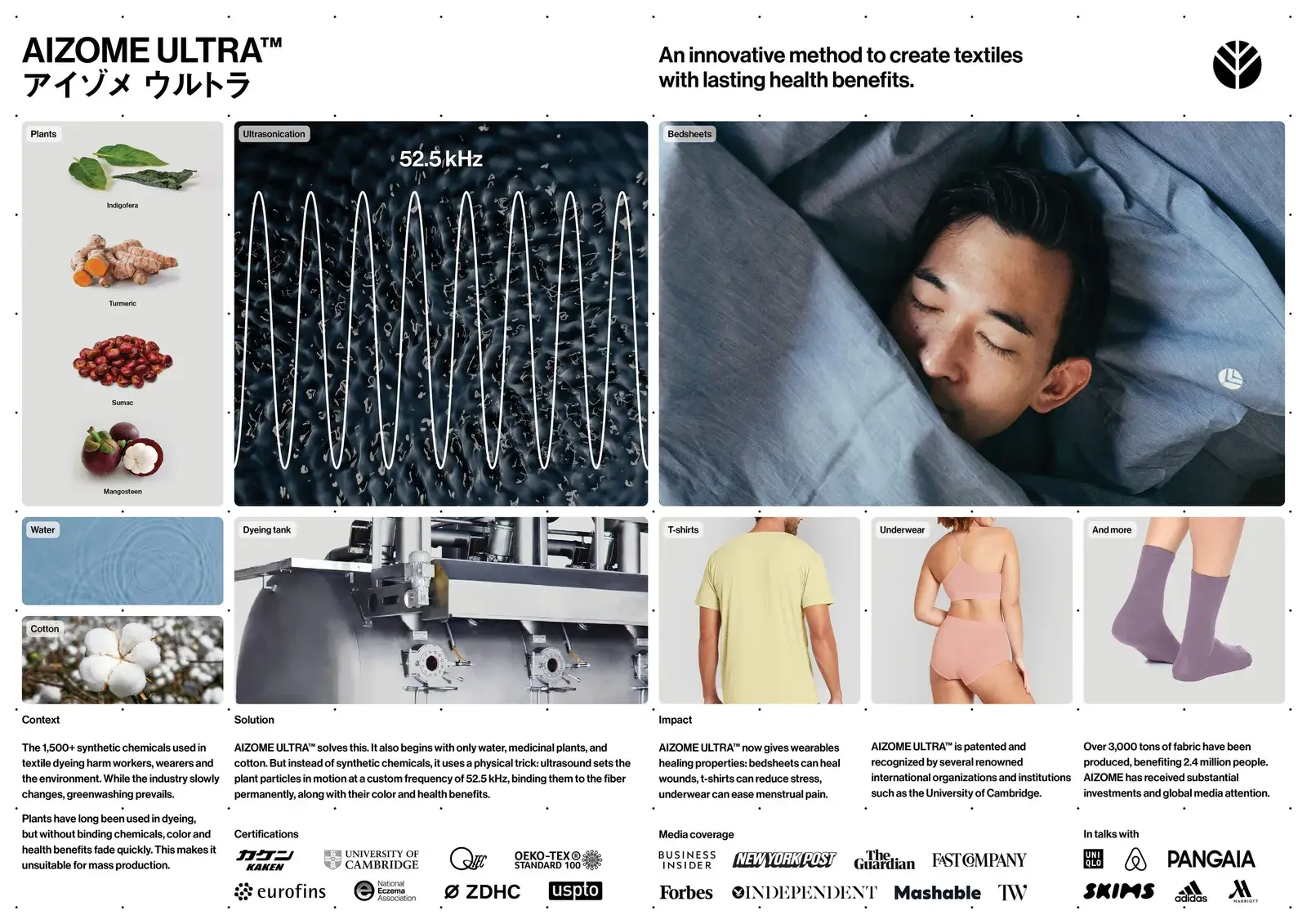
According to AIZOME’s press release, more than 1,500 synthetic chemicals are still used in textile dyeing, with potential consequences for workers, wearers and the environment. The company argues that conventional approaches to binding colour create challenges for plant-based alternatives.
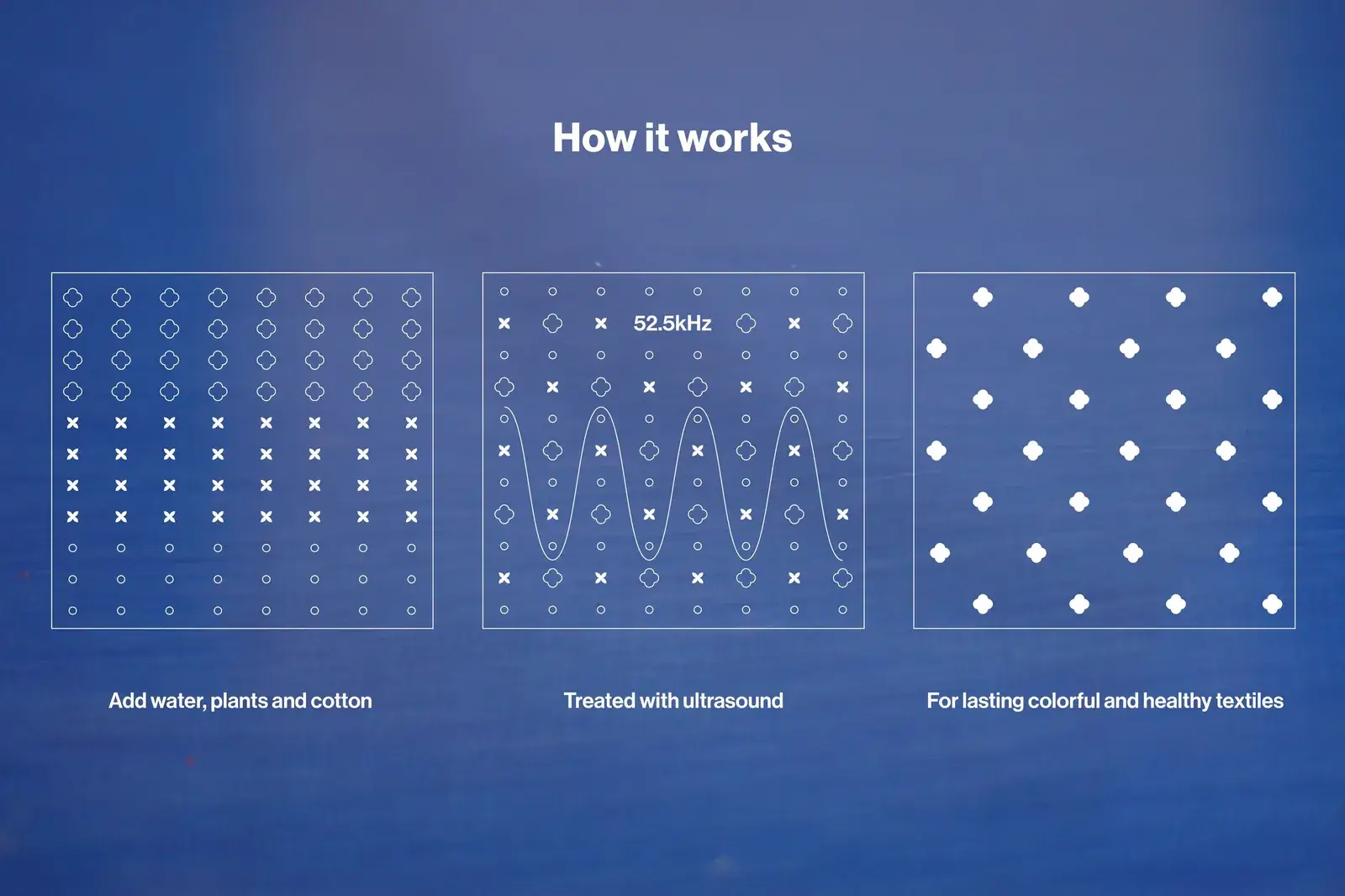
AIZOME ULTRA™ uses ultrasound instead of conventional synthetic chemical binders. According to the company, sound waves operating at 52.5 kHz underwater set plant particles in motion, helping bind them to cotton fibres.
AIZOME describes the dyeing stage as taking between 60 and 90 minutes, with repeated applications of ultrasound. The wider manufacturing process can take about a year, the company says, because it monitors organic quality from farm to finished fabric.
The company presents this method as a way to retain plant-derived colour and the properties associated with the plants used. The supplied press release does not include independent test results establishing the permanence of the colour or comparing the process with conventional dyeing methods.
A Traditional Japanese Dyeing Method, Reworked
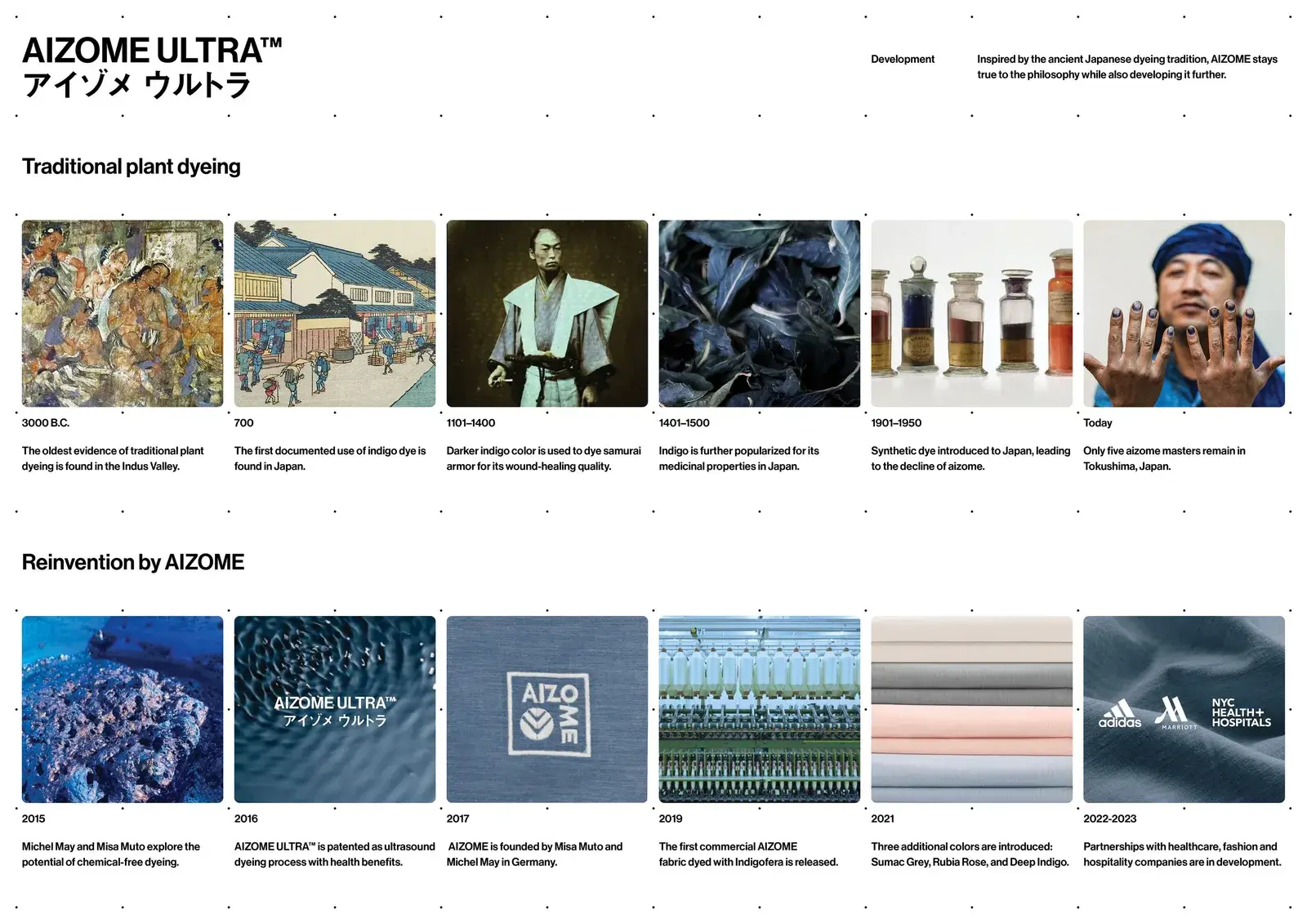
AIZOME takes its name from aizome, a Japanese plant-based dyeing tradition associated with natural indigo.
According to the company’s press release, indigo was historically valued for properties associated with wound healing, including its use in Samurai armour. The company describes the rise of synthetic dyes as a turning point in the decline of traditional aizome.
AIZOME ULTRA™ applies ultrasound to this plant-based approach. Rather than relying on conventional synthetic binders, the process aims to help plant-derived colour attach to cotton through physical action.
The practical question is whether the method can deliver consistent colour and durability at commercial scale. Those outcomes would need to be assessed through testing of the finished textiles and the production process.
What Happens to the Wastewater?
AIZOME says the wastewater produced by its process retains benefits associated with the medicinal plants used in dyeing. The supplied press release does not provide wastewater test results or identify which properties remain after processing.
This distinction matters when evaluating environmental claims. The use of plant-derived ingredients does not, by itself, establish that wastewater is harmless. Its composition and potential effects require appropriate testing.
The same caution applies to broader environmental benefits. The company’s description explains the intended approach, but does not provide comparative data establishing the process’s overall environmental performance.
The Proposed Healthcare Applications
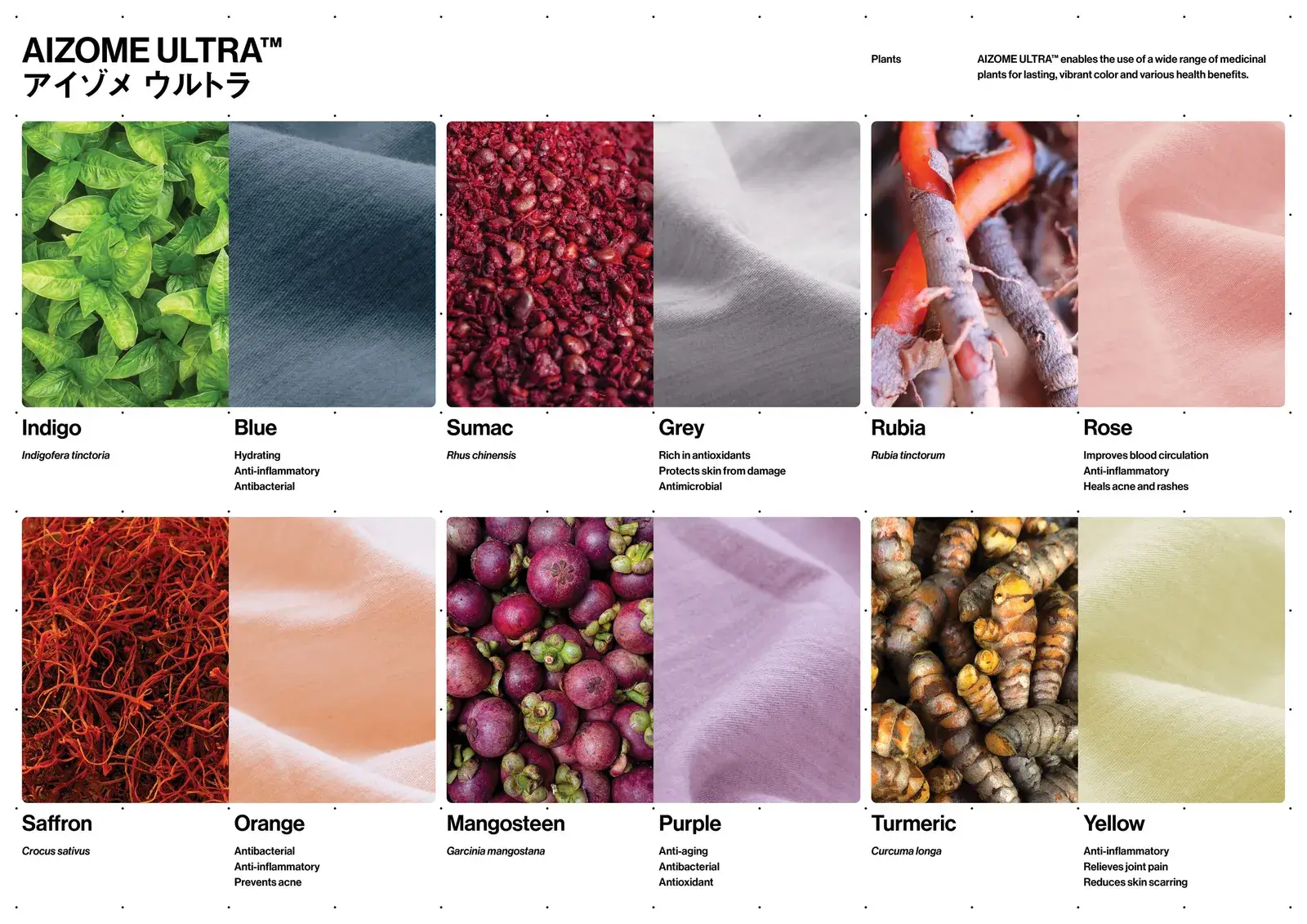
AIZOME ULTRA™ is also presented as a way to bring plant-derived properties into everyday textiles. The company identifies possible applications including bedsheets intended to help heal wounds, T-shirts designed to reduce stress and underwear intended to ease menstrual pain.
AIZOME’s press release states that its technology has been validated by the University of Cambridge and recognised by the National Eczema Association as an innovation that improves quality of life for people with sensitive skin. The release does not detail the validation methods or specify the scope of that recognition.
The company also states that its medical benefits were approved by the U.S. Food and Drug Administration in 2023. The supplied release does not identify the specific authorisation, product or medical indication, so the scope of this regulatory claim remains unclear.
These proposed applications should be distinguished from the dyeing technology itself. The presence of plant-derived compounds in a textile does not, on its own, establish that the finished product can treat a medical condition. Each health claim requires evidence appropriate to the product and its intended use.

A Different Approach to Plant-Based Textile Dyeing
AIZOME reports that more than 3,000 tonnes of fabric have been produced using its technology and that 2.4 million people have benefited. These are company-reported figures; the supplied press release does not explain how the beneficiary number was calculated or provide independent production records.
The company also reports receiving substantial investment and international media attention. Partnerships with healthcare institutions, fashion brands and cosmetics producers are described as underway.
AIZOME ULTRA textile dyeing technology focuses on changing how plant-derived colour is applied to cotton, rather than changing the colour source alone. Ultrasound is central to the company’s approach to plant-based textile dyeing.
Whether the technology delivers measurable environmental improvements and the proposed healthcare benefits depends on evidence specific to those outcomes. For now, the project presents a patented alternative to conventional synthetic chemical binders, with further questions about its performance and wider benefits requiring their own evidence.
Explore more technology campaigns on Campaigns of the World.
Credits
Campaign: AIZOME ULTRA™ Textile Dyeing Technology
Brand: AIZOME
Advertising Agency: Serviceplan Group
Production Company: off studios
Art Directors: Camille Nizet, Tanvi Phalak, Rohil Borole, Kai West Schlosser
Art Editor: Mike Friedland
Brand Design Director: Oliver Thellmann
CEO & Founders: Michel May, Misa May, Johannes Auffermann
Chief Creative Officer: Alex Schill
Cinematographers: Tom Kubik, Lucas Bergmüller
Colourist: Mike Friedland
Composer: Benjamin Gebert
Copywriters: Shruthi Subramanian, Taro Taniwaki, Sandra Valencia
Creative Directors: Naho Kosukegawa, Dennis Fritz
Creative Producer: Kevin Riedl
Designers: Arlinda Shabani, Andrea Da Silva
Directors of Photography: Tom Kubik
Director of Production: Lucas Bergmüller
Executive Creative Directors: Franz Röppischer, Lorenz Langgartner, Hagen Fiedler
Film Producer: Simon Mairhofer
Head of Audio: Benedikt Dorn
Interns: Ana Madalena Marques, Rafter Manguiat, Flavia Conti, Katie Eugster, Ani Barbakadze, Thomas Disanzo, Nareg Boyadjian
Junior Art Director: Michał Kuśmierz
Junior Motion Designer: Margarita Nikolajeva
Motion Designer: Nicolai Kovács
Post Producer: Felicitas Stahnke
Senior Developers: Timm Reiter, Stefan Schröder
Senior Motion Designer: Gergely Kozma
Sound Designer: Benedikt Dorn
Technology Lead: Malte Bender
Web Designers: Arlinda Shabani, Andrea Da Silva
Film Production: off studios
Post-Production Company: nhb next
Web Development: Astral Kreativ
Brand Partnerships Director: Megan Powers
Chief Executive Officer: Johannes Auffermann
Fundraising Director: Ivana Radovanovic
Producers: Simon Mairhofer, Kevin Riedl