
I Want AI to Take My Job: UNICEF’s Sharp Take on Child Labour
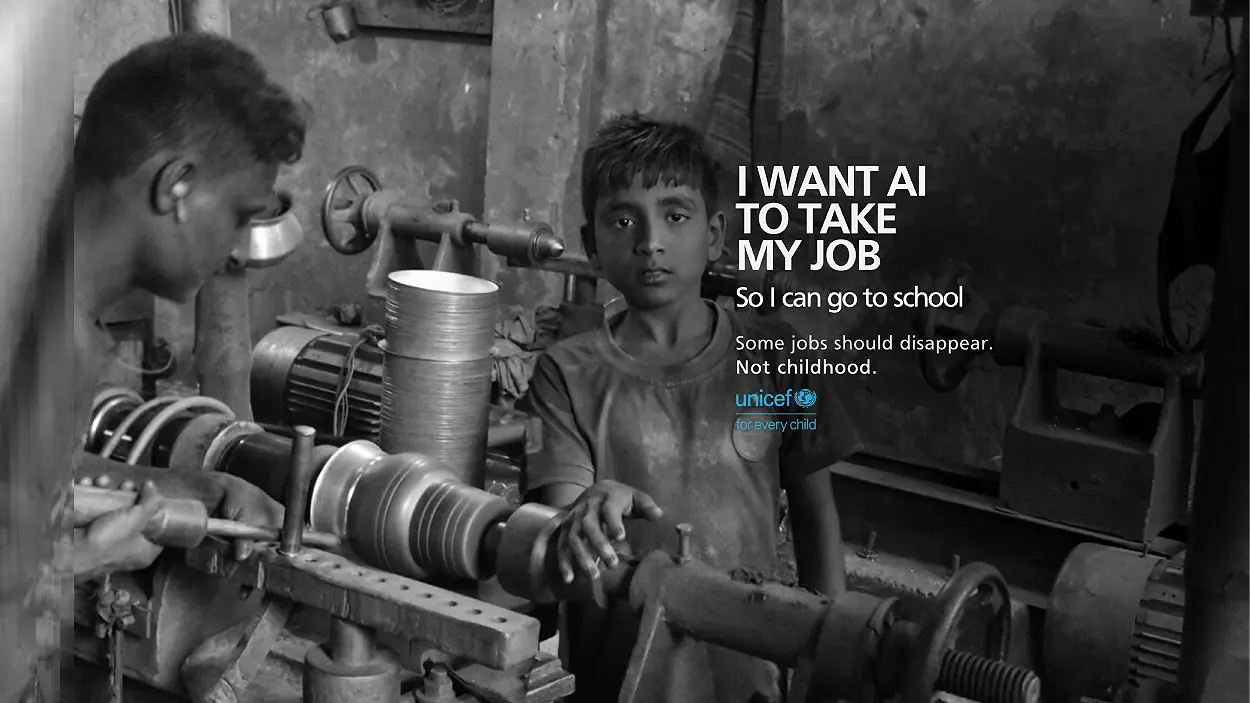
I Want AI to Take My Job by UNICEF takes the fear of artificial intelligence replacing workers and turns it toward a crisis that should not need a new technology debate to be seen: child labour.
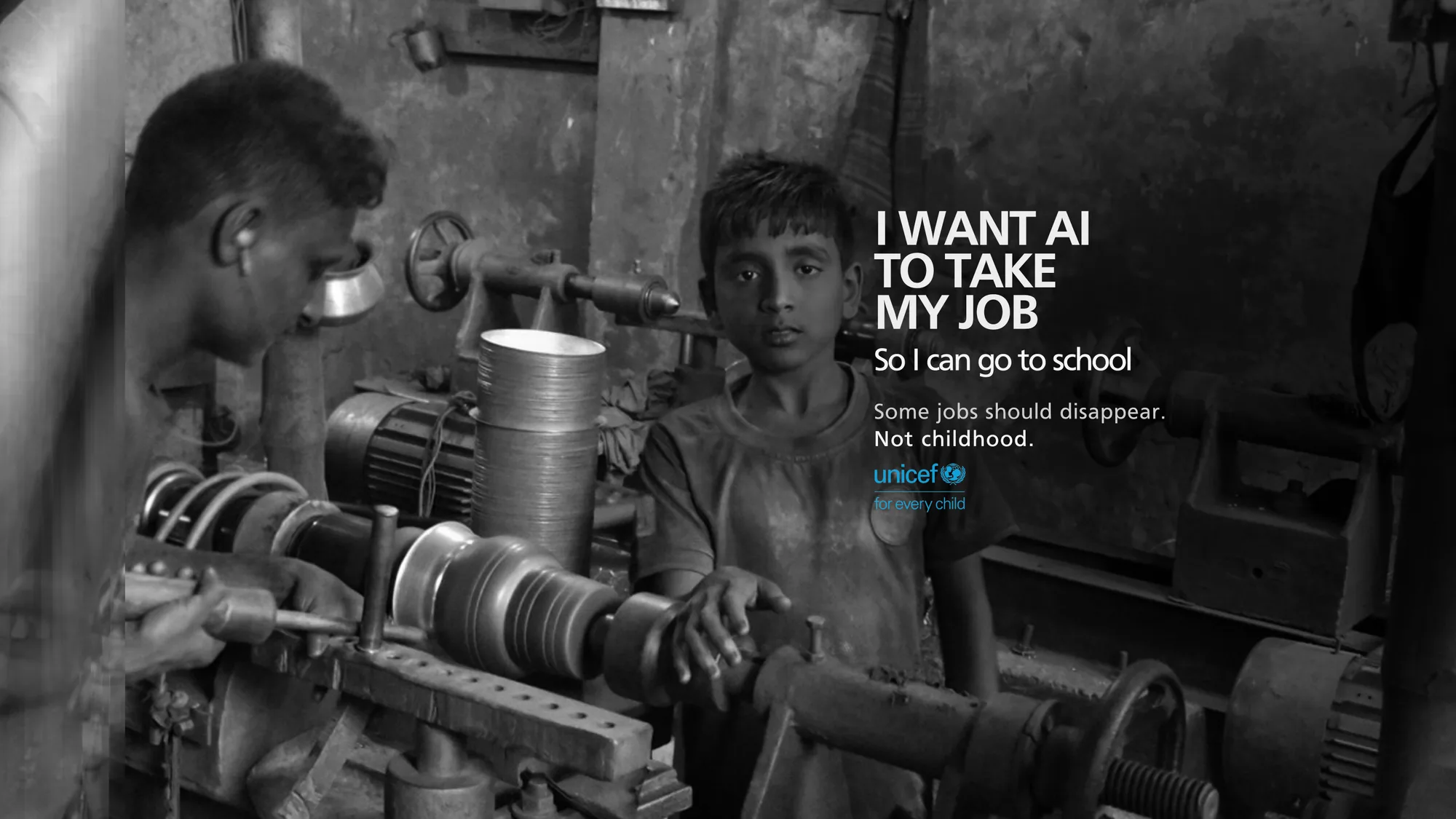
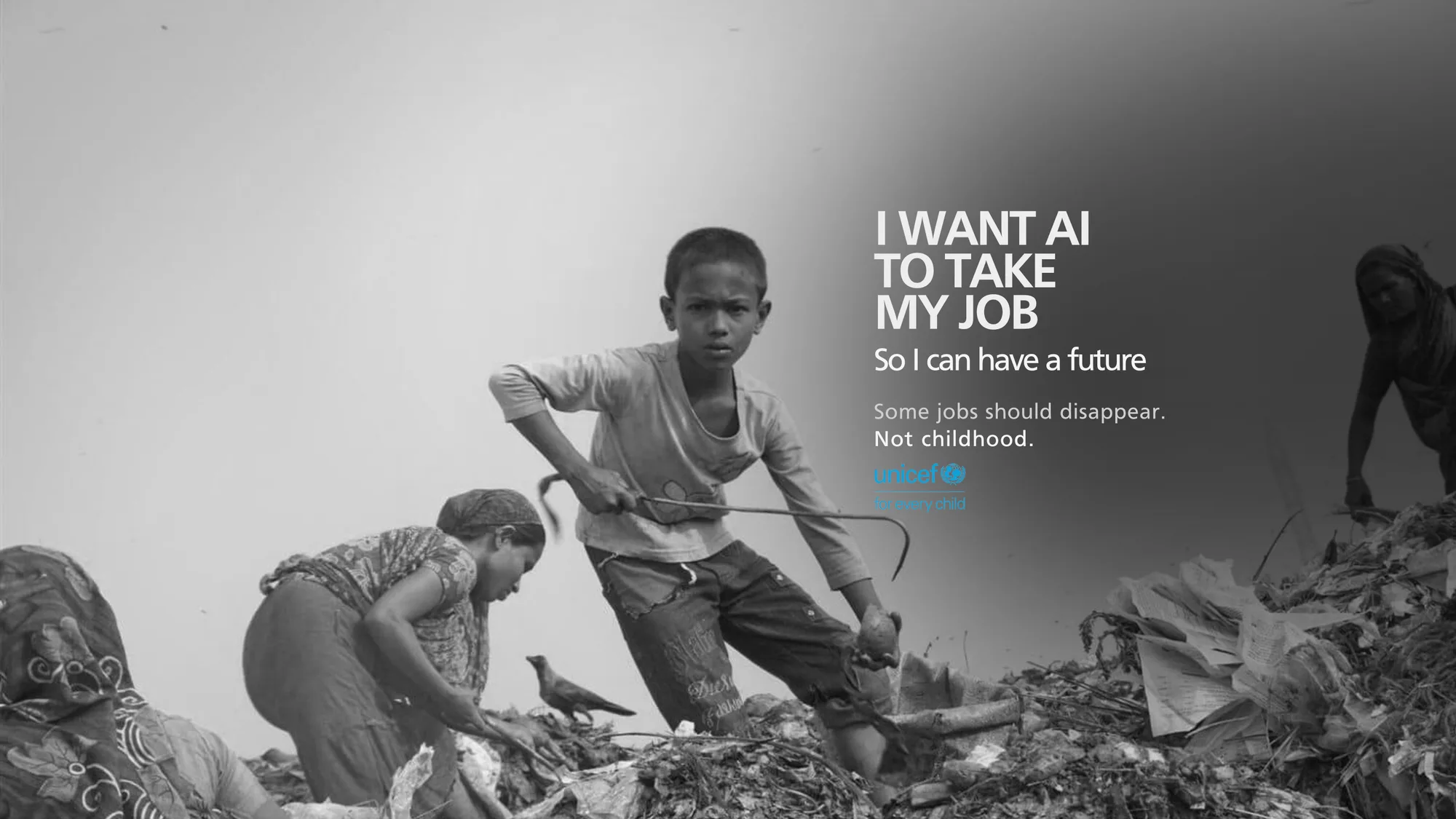
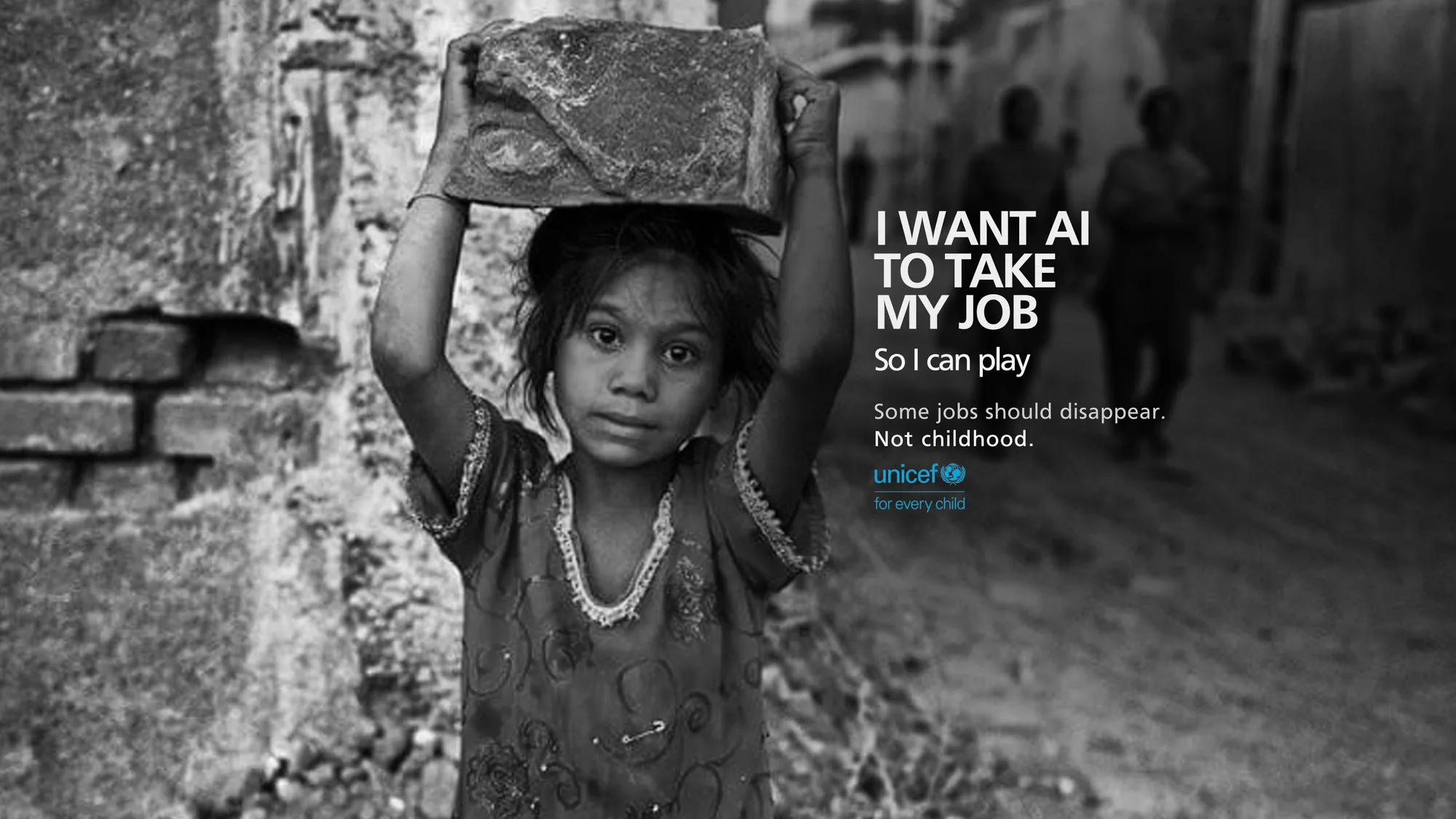
The print campaign uses a line that feels wrong the moment you read it: “I WANT AI TO TAKE MY JOB.” The words appear in child labour environments such as workshops, factories, construction sites, and homes. In each execution, children are shown working instead of learning, playing, resting, and growing up safely.
The idea is not about AI as a saviour. It is about the kind of work no child should be doing at all.
When AI Fear Becomes a Child’s Hope
Most conversations around AI and employment are built around adult anxiety. People worry about careers, income, relevance, and replacement. I Want AI to Take My Job shifts the speaker completely.
Here, the person asking to be replaced is a child.
That change gives the campaign its force. For adults, the idea of losing a job to a machine can feel threatening. For a child trapped in labour, losing that job could mean returning to school, safety, and childhood. The campaign uses that contradiction without overexplaining it.
The supporting lines, including “So I can go to school” and “So I can be a child,” make the message clear. The closing line, “Some jobs should disappear. Not childhood,” gives the work a simple final punch without turning it into a lecture.
A Print Campaign Built on One Sharp Reversal
I Want AI to Take My Job works because it does not try to look futuristic. There are no shiny robots, no digital spectacle, no exaggerated technology language. The setting is grounded in places where child labour happens: physical, ordinary, and uncomfortable.
That makes the campaign feel more immediate. It uses AI only as the entry point. The real subject is not automation. It is the loss of childhood.
The line also has strong editorial tension. It takes a sentence people expect to hear from adults and places it in the mouth of a child. That switch forces the viewer to pause. The campaign does not ask people to feel sorry in a broad, vague way. It makes them face the absurdity of a world where a child could want a machine to take over their work because that work should never have been theirs.
The Human Cost Behind the Idea
The issue behind the campaign remains urgent. According to UNICEF and ILO estimates released in 2025, nearly 138 million children were engaged in child labour in 2024, including around 54 million in hazardous work likely to affect their health, safety, or development.
Those numbers give the campaign a harder edge. AI job loss is often discussed as a possible future. Child labour is already happening. The campaign uses a current cultural fear to redirect attention to a crisis that continues across industries, homes, and informal work settings.
Why the Idea Lands
The best part of this campaign is its restraint. It does not try to solve child labour inside one ad. It does not claim AI will fix the problem. It simply uses a familiar fear to reveal a deeper injustice.
For UNICEF, the print format suits the thought. A single image, a direct headline, and a short follow-up line are enough. The campaign does not need a long explanation because the reversal is already clear.
I Want AI to Take My Job is a strong example of social impact advertising using the language of the moment without becoming trapped by the trend. It is not really a campaign about artificial intelligence. It is a campaign about children being forced into roles they should never have had.
Credits
Copy & Design: Arun Anoop
This campaign is about:
Unicef, I Want AI to Take My Job, AI advertising, child labour campaign, creative print ads, print campaign, social impact advertising, child rights, human rights advertising, anti child labour, education awareness, nonprofit campaign, artificial intelligence campaign, childhood rights, public awareness campaign.