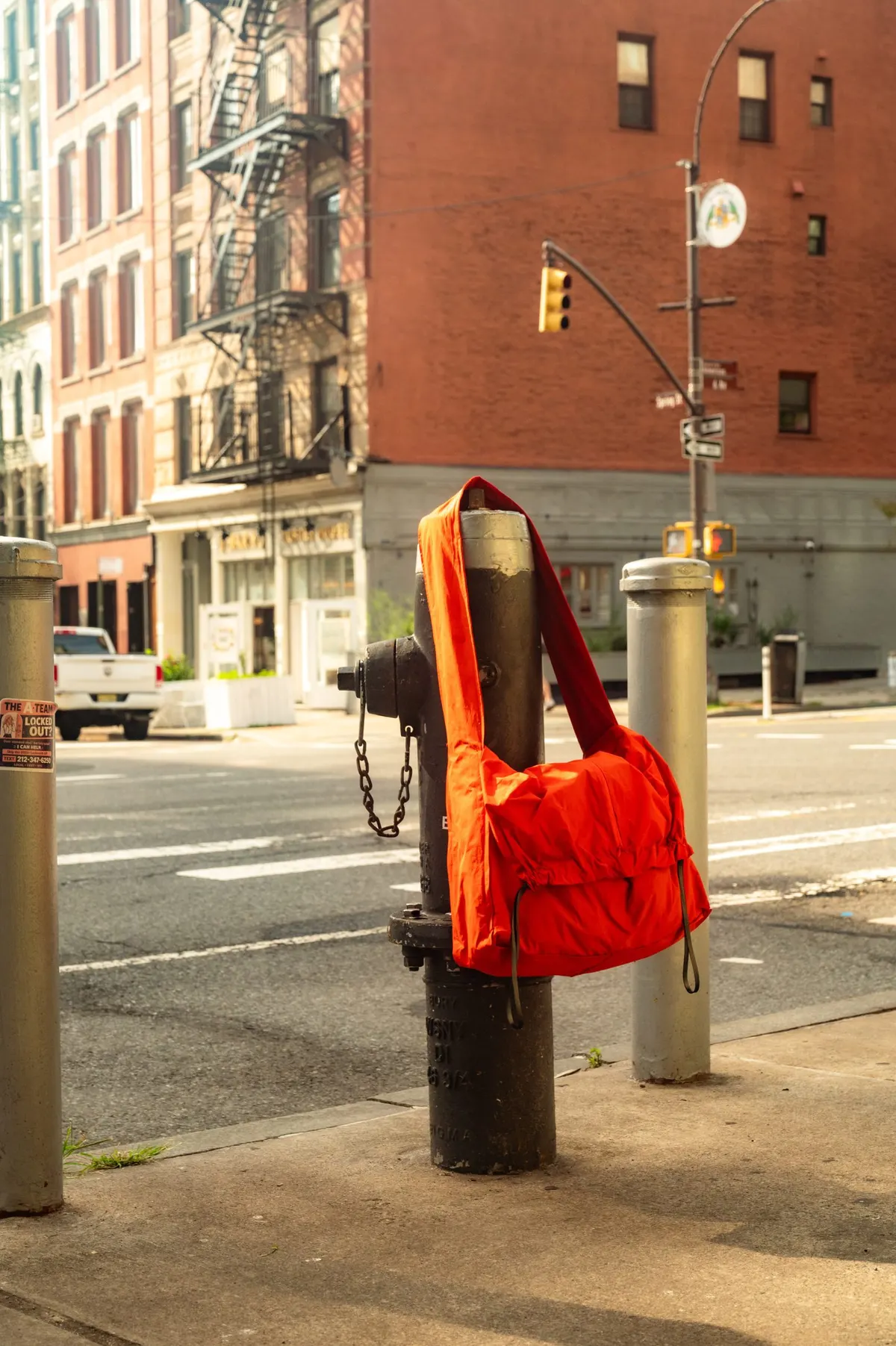
A tote bag is usually one of the most ordinary things in a city. LIFELINE turns that everyday object into a self-inflating tote with a very different second purpose. The conceptual bag can transform into a life jacket in around 15 seconds, turning an everyday carry item into something designed for an emergency.
Presented around New York Climate Week, the project responds to the increasingly familiar sight of flooding in the city and asks a strange but direct question: what happens when emergency equipment becomes part of everyday life?
From Everyday Tote to Life Jacket
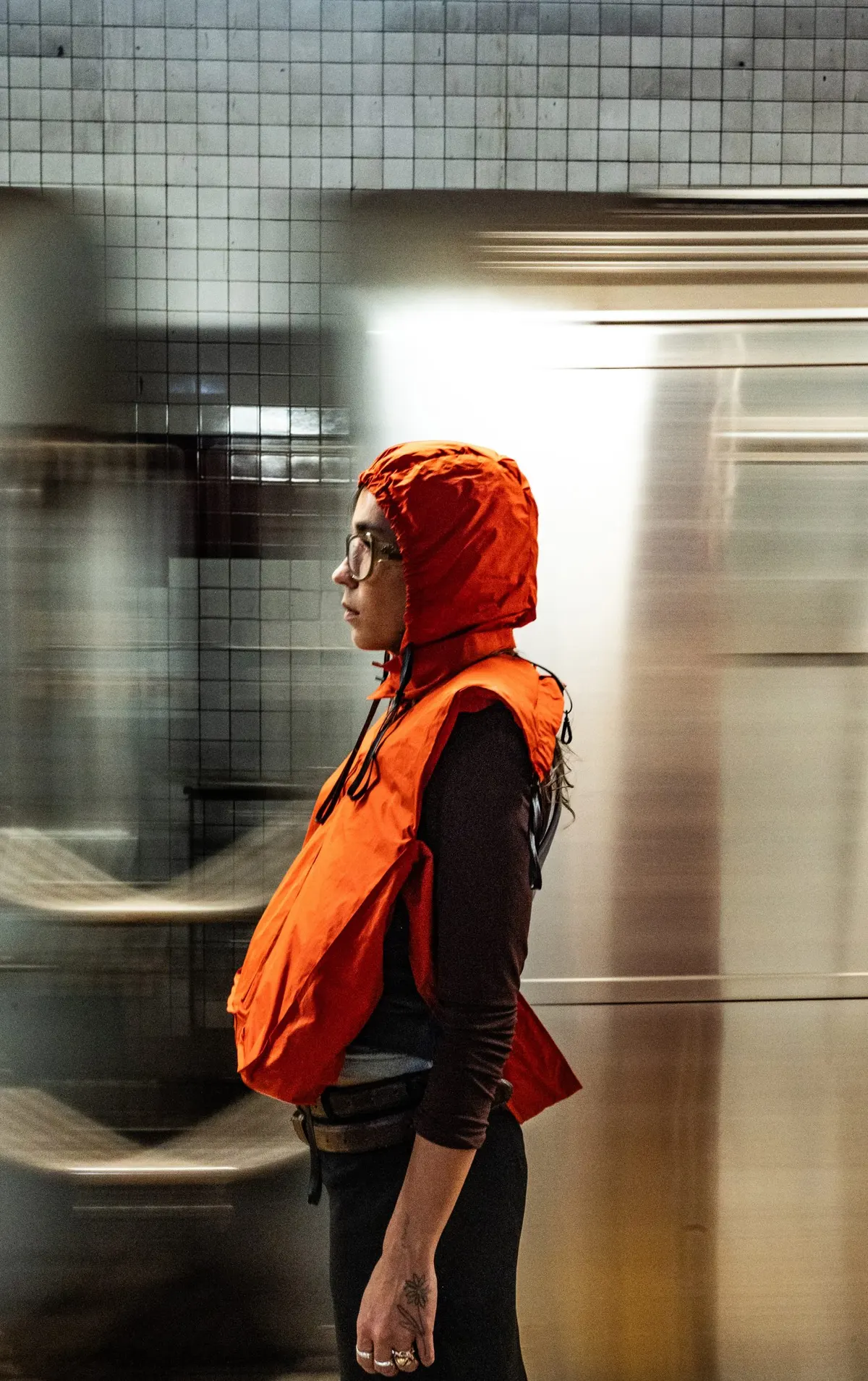
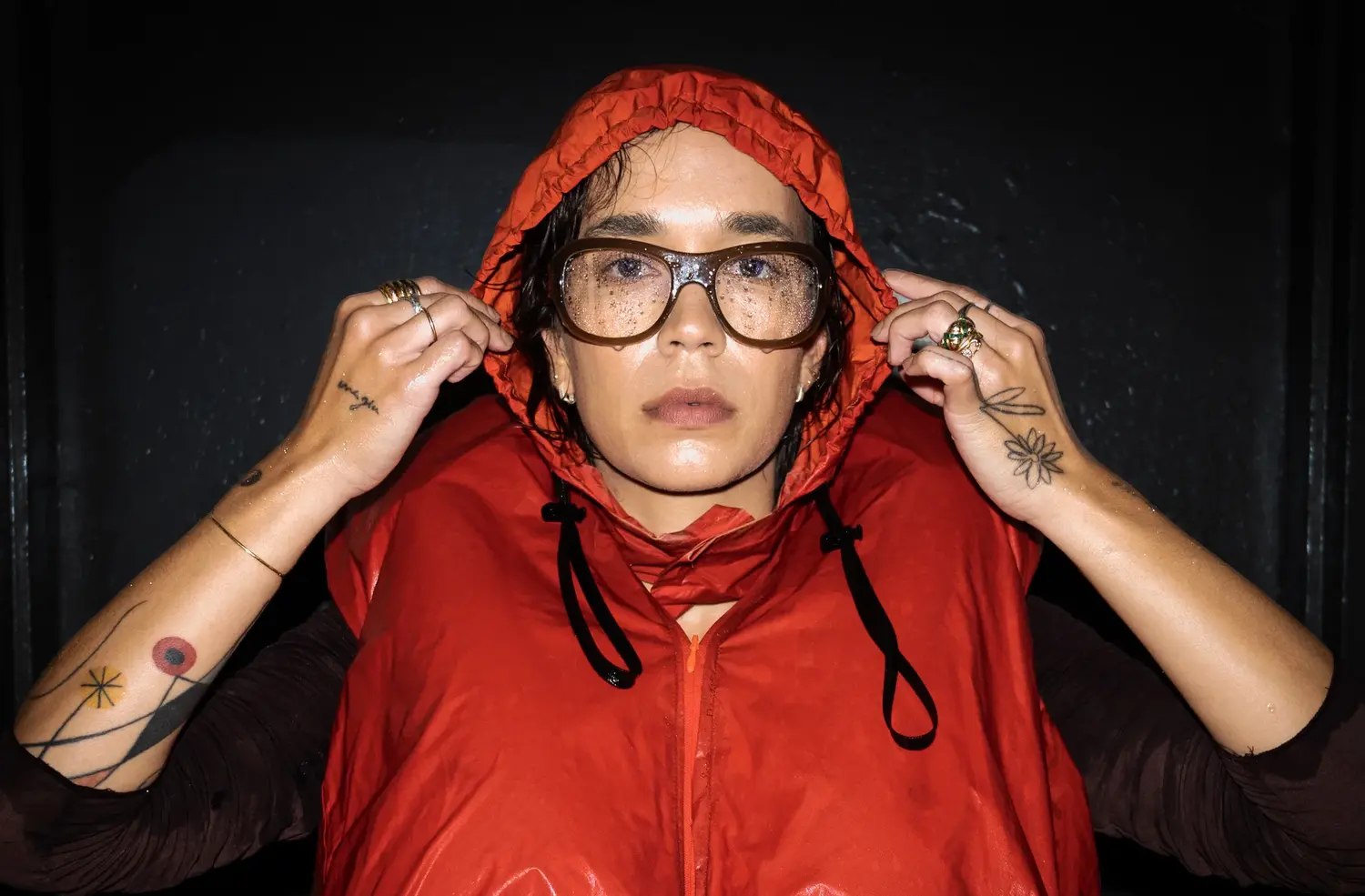
At first glance, LIFELINE looks like a bright orange tote. A central zip allows the bag to open so it can be worn over the head. Pulling its straps activates the inflation system, transforming the bag into flotation equipment.
The idea came from artist and creative director Philip Le Brun, who developed the project with artist, designer and architect Gabriela Mestriner and a wider group of creatives.
The object was made using upcycled materials, including a life vest. The development process involved testing different materials, inflation systems and proportions before arriving at the final form.
The result deliberately sits somewhere between fashion accessory and emergency equipment. It looks familiar enough to disappear into everyday life, yet its purpose changes completely when it is needed.
An object for a future nobody wants
That contrast is central to the idea.
A life jacket normally belongs in a boat, aircraft or emergency kit. A tote belongs on a shoulder, in a supermarket or on a commute. Putting the two together creates an uncomfortable picture of a future in which preparing for extreme weather could become as routine as carrying a laptop or groceries.
The creators describe the underlying idea as an “essential that shouldn’t exist.”
LIFELINE is not presented as a commercial product or a practical answer to flooding. It is a conceptual object that brings the possibility of emergency preparation into a setting where it feels completely out of place.
That makes the idea particularly effective. Rather than asking people to study another warning about climate risk, it gives that warning a physical form that can be carried, worn and understood almost instantly.
The same principle can be seen in other creative work that turns familiar objects into responses to real-world problems, such as urban safety initiatives.
Designed to look familiar
The orange colour and simple tote silhouette help the idea land quickly. There is no complicated interface or futuristic form to decode.
The transformation is the message.
A person carries an ordinary bag. The situation changes. The bag changes with it.
That simplicity also gives the project a strong visual language for photography, film and public communication. Rather than explaining the idea through charts or statistics, LIFELINE turns it into something people can immediately picture themselves using.
The project was created as a one-off concept and is not for sale. Its value is therefore less about commercial utility and more about the conversation created around it.
The Bag Is the Warning
LIFELINE works because the message is built into the object itself.
The creative tension comes from putting two things together that normally have nothing to do with each other. A tote represents routine. A life jacket represents danger. The moment they become the same object, the distance between everyday life and emergency preparation becomes much smaller.
That is what gives the concept its edge. The bag does not need to explain what climate risk means. Its transformation does that work.
There is also a useful restraint in the idea. LIFELINE does not claim that a tote can solve flooding. Instead, it makes people imagine what it would mean if conditions became serious enough for an object like this to feel necessary.
For a one-off conceptual project, that is a strong creative proposition. The most memorable part is not the mechanism inside the bag. It is the thought that something so ordinary might someday need a second life.
The idea sits within a broader tradition of creative problem-solving, where an existing object or cultural habit is redesigned around an unexpected need. Mukhota is another example of familiar form being given a new safety function.
Credits
Brand: LIFELINE
Campaign: THE SELF INFLATING TOTE
Concept & Creative Direction: Philip Le Brun
Art Direction, Bag Design & Performance: Gabriela Mestriner
Film & Editing: Jack Inzer
Photography & Image Production: Emmett Orgass
Visual & Interactive Design: Julia Albuquerque
Styling: Lucila Hernandes